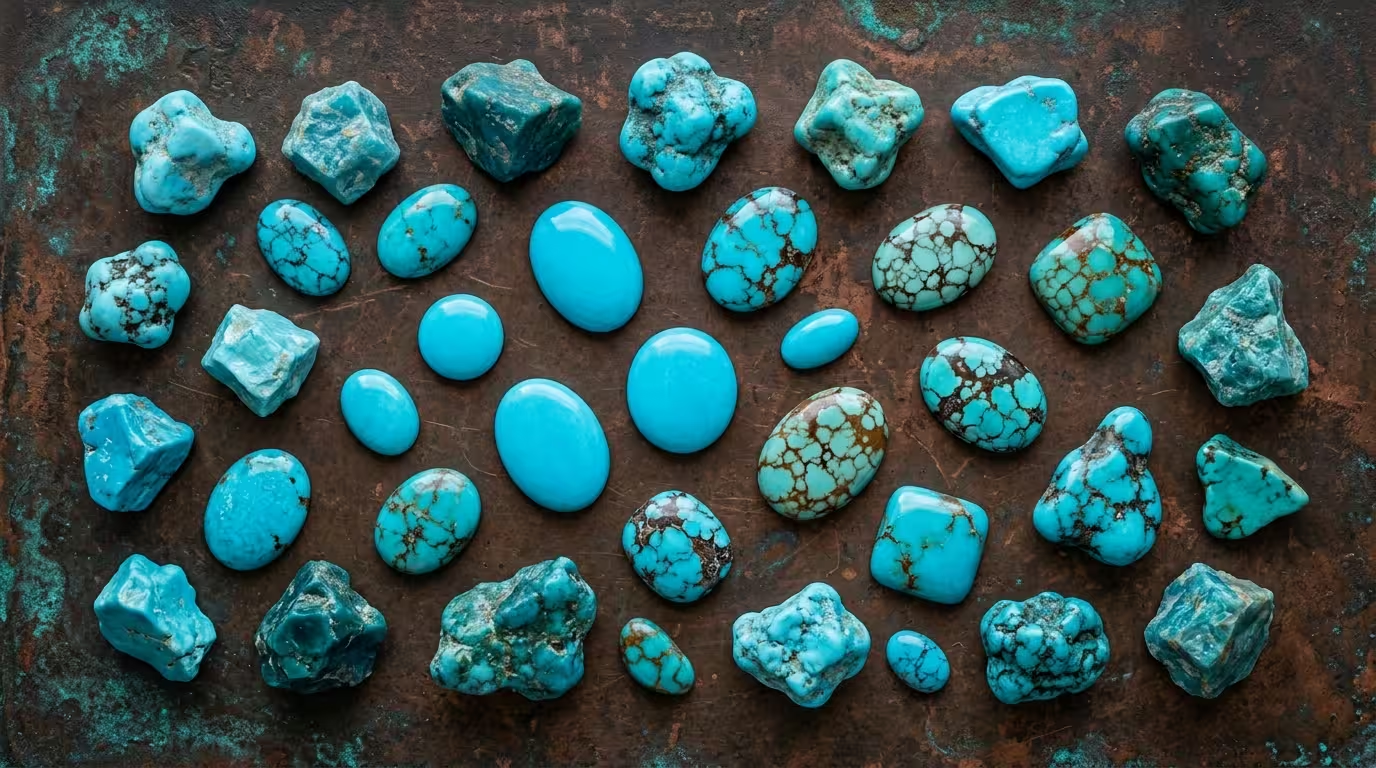
Where turquoise is found determines everything about its quality, color, and value. Not all turquoise is equal. A genuine Nishapur Persian turquoise and a stabilized commercial grade stone are technically the same mineral but the difference in what serious buyers will pay for them is enormous. If you are buying a natural turquoise ring, knowing where turquoise is found gives you the knowledge to make a genuinely informed decision.
This guide covers every major source of natural turquoise in the world, what makes each one different, and why origin matters more than most buyers realize.
Turquoise is a phosphate mineral that forms near the earth’s surface when copper rich groundwater reacts with aluminum and phosphorus in the surrounding rock over millions of years. The blue color comes from copper within the mineral structure. Green variations come from higher iron content. The distinctive veining or matrix pattern running through most turquoise comes from the host rock that surrounded it during formation.
Turquoise forms in arid and semi arid regions where copper deposits exist near the surface and water infiltration over geological time has created the right chemical conditions. This is why the answer to where turquoise is found almost always points to dry desert and mountain regions from Iran to the American Southwest to Central Asia.
Where Turquoise Is Found — The 7 Most Important Sources
The answer to where turquoise is found spans multiple continents and thousands of years of human history. Each source has its own geological character, color profile, and cultural significance. Here are the seven most important turquoise producing regions in the world.
1. Nishapur, Iran — The World’s Most Prized Turquoise Source
When gemologists and collectors ask where turquoise is found at its absolute finest, the answer is Nishapur in the Khorasan province of northeastern Iran. Persian turquoise from Nishapur has been mined for over three thousand years and remains the global benchmark for turquoise quality. The mines at Nishapur sit at elevations above 2,000 meters in the arid mountains of northeastern Iran and have produced the world’s most consistently fine turquoise for longer than almost any other gemstone deposit on earth.
Nishapur Persian turquoise is prized for its pure sky blue color with no matrix or veining. According to the GIA turquoise quality guide, color purity and the absence of matrix are the primary factors that determine turquoise value at the highest levels of the market. This matrix free sky blue color defines the finest grade of Persian turquoise known as Hussaini feroza, named after its exceptional purity and depth of color.
In Islamic tradition Persian turquoise known as feroza has been worn by scholars, rulers, and devout men for centuries as a stone of spiritual protection and divine blessing. The Prophet Muhammad peace be upon him is reported to have recommended wearing natural stones and turquoise has held a place of particular honor in Islamic gemstone tradition ever since.
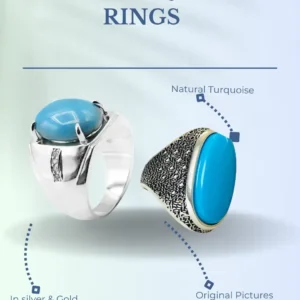
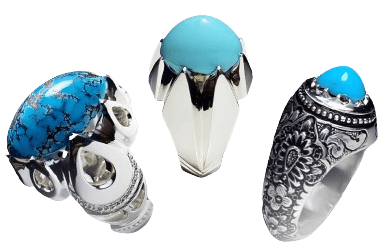
At RingsWear our natural feroza turquoise rings feature genuine Persian turquoise stones that are completely natural, not synthetic, not dyed, and not treated in any form. This is the real thing from the most historically significant source of where turquoise is found anywhere on earth.
2. American Southwest — The Most Diverse Turquoise Region on Earth
The American Southwest is where turquoise is found in its greatest variety. The states of Arizona, Nevada, New Mexico, and Colorado contain dozens of individual turquoise mines, each producing stones with distinct color profiles and matrix patterns that experienced collectors can identify by sight. American turquoise has been mined by Native American peoples for over a thousand years and forms the foundation of Navajo, Zuni, and Pueblo jewelry traditions that continue to this day.
The most famous American turquoise mines include Sleeping Beauty in Arizona which produced a pure sky blue turquoise similar in color to Persian turquoise and is now closed making existing stones increasingly valuable. Kingman in Arizona produces vivid blue stones with distinctive matrix patterns. Royston in Nevada produces a distinctive blue green turquoise with rich brown matrix. Bisbee in Arizona was famous for its deep blue stones with black matrix before the mine closed decades ago.
American turquoise ranges from stabilized commercial grade material to exceptional natural hard turquoise that requires no treatment. Understanding the difference matters when buying. Natural hard turquoise from named American mines commands significant premiums over stabilized or treated material.
3. Sinai Peninsula, Egypt — The World’s Oldest Turquoise Mines
The Sinai Peninsula in Egypt is where turquoise is found at its most historically significant. The mines at Serabit el Khadim are among the oldest known mines in human history, worked by ancient Egyptians as far back as 3,500 BCE. Turquoise from Sinai adorned the jewelry of pharaohs and was considered a sacred stone in ancient Egyptian culture for thousands of years.
Sinai turquoise tends toward a softer more muted blue green color than the vivid sky blue of Persian or Sleeping Beauty turquoise. The mines today produce limited quantities of material and genuine ancient Sinai turquoise is more of historical interest than a current commercial gemstone source. The significance of this location in the story of where turquoise is found cannot be overstated for anyone interested in gemstone history.
4. China — The World’s Largest Turquoise Producer by Volume
China is where turquoise is found in its greatest commercial quantities today. The Hubei province produces enormous volumes of turquoise that supply the global commercial jewelry market. Chinese turquoise varies significantly in quality from soft low grade material that requires stabilization to occasional fine natural hard stones with excellent color.
The challenge with Chinese turquoise is treatment disclosure. Much of the commercially available turquoise from China has been stabilized meaning resins have been injected into the porous stone to harden it and improve its color. This is an accepted industry practice but it must be disclosed. Always confirm whether turquoise has been treated before purchasing any natural turquoise ring.
5. Tibet — Distinctive Turquoise with Deep Cultural Roots
Tibet is where turquoise is found with some of the deepest cultural significance in the world. Turquoise has been central to Tibetan culture, spirituality, and jewelry for thousands of years. Tibetan turquoise tends toward blue green to green tones with distinctive matrix patterns and is often found in antique Tibetan jewelry pieces that circulate through the international market.
Genuine old Tibetan turquoise with natural patina and original matrix is increasingly sought by collectors interested in stones with genuine cultural provenance. The spiritual tradition surrounding Tibetan turquoise gives these stones a significance beyond their appearance that resonates with buyers who care about the meaning behind what they wear.
6. Mexico — Turquoise with Ancient Mesoamerican Heritage
Mexico is where turquoise is found with deep roots in ancient Mesoamerican culture. The Aztecs and earlier Mesoamerican civilizations prized turquoise as one of their most sacred materials, using it in ceremonial masks, mosaics, and jewelry of extraordinary craftsmanship. Mexican turquoise deposits exist in several states including Sonora which produces a distinctive blue green stone sometimes called Sonoran turquoise.
Mexican turquoise carries genuine historical significance and produces attractive stones for buyers interested in turquoise with ancient cultural heritage. It is not as widely known commercially as American Southwest or Persian turquoise but represents a fascinating chapter in the global story of where turquoise is found and how it has been used across civilizations.
7. Afghanistan and Central Asia — Ancient Turquoise Trade Routes
Afghanistan and the broader Central Asian region is where turquoise is found along the ancient trade routes that connected Persia to China and India for thousands of years. Afghan turquoise has been mined and traded since antiquity and supplied markets across the Islamic world alongside Persian turquoise from Nishapur.
Afghan turquoise tends toward blue green tones and varies in quality. The proximity of Afghan deposits to the Persian mines of Nishapur means both traditions share deep cultural and historical connections in terms of how turquoise was used, valued, and spiritually interpreted across Islamic civilization for over a thousand years.
Why Turquoise Origin Matters When Buying a Ring
Now that you know where turquoise is found around the world, why does origin matter when buying a natural turquoise ring? Origin matters because it determines color quality, treatment status, and cultural significance. Persian Nishapur turquoise commands the highest prices because its natural sky blue color is consistently the finest produced anywhere on earth. American Southwest turquoise from named closed mines like Sleeping Beauty or Bisbee commands premiums because supply is fixed and decreasing every year.
The most important questions to ask when buying any natural turquoise ring are whether the stone is completely natural and untreated, whether it has been stabilized with resin, and whether the seller can provide documentation of origin. A seller who answers these questions clearly and honestly is a seller worth buying from.
At RingsWear every turquoise ring features a completely natural stone that is not synthetic, not dyed, and not treated in any form. Certification confirming stone authenticity is available on demand. Browse our complete collection of natural feroza turquoise rings and discover genuine Persian and natural turquoise designs for men and women. Learn more about how we source every stone on our about us page.
Summary — Where Turquoise Is Found Around the World
The question of where turquoise is found has seven primary answers. Nishapur Iran for the world’s most prized pure sky blue Persian turquoise. The American Southwest for the most diverse range of named mines and Native American heritage stones. Sinai Egypt for the oldest mines in human history. China for the largest commercial production by volume. Tibet for stones with deep spiritual and cultural roots. Mexico for ancient Mesoamerican heritage. And Afghanistan and Central Asia for turquoise along the ancient Islamic trade routes.
Each source tells a different geological and cultural story. Each produces stones with their own character and significance. Knowing where turquoise is found and what that means gives you the knowledge to buy a genuine natural turquoise ring with complete confidence.
Agate gemstone rings are some of the oldest and most varied rings in the world,...
Finding reputable jewelers selling natural topaz matters more than most buyers expect, because topaz is...
Can men wear ruby ring styles the way women do? Yes, and they have for...
Choosing the right yellow sapphire ring finger is the first question most people ask once...

Knowing how to clean amethyst ring at home keeps the purple bright and the silver...

The Yemeni aqeeq gemstone in Islam holds a place few other stones can claim. Worn...

The difference between synthetic vs natural sapphire is the single most important thing to understand...

Yellow sapphire rings for men are among the most meaningful pieces a man can own....
Real gemstone rings in 925 silver are one of the smartest purchases a man can...