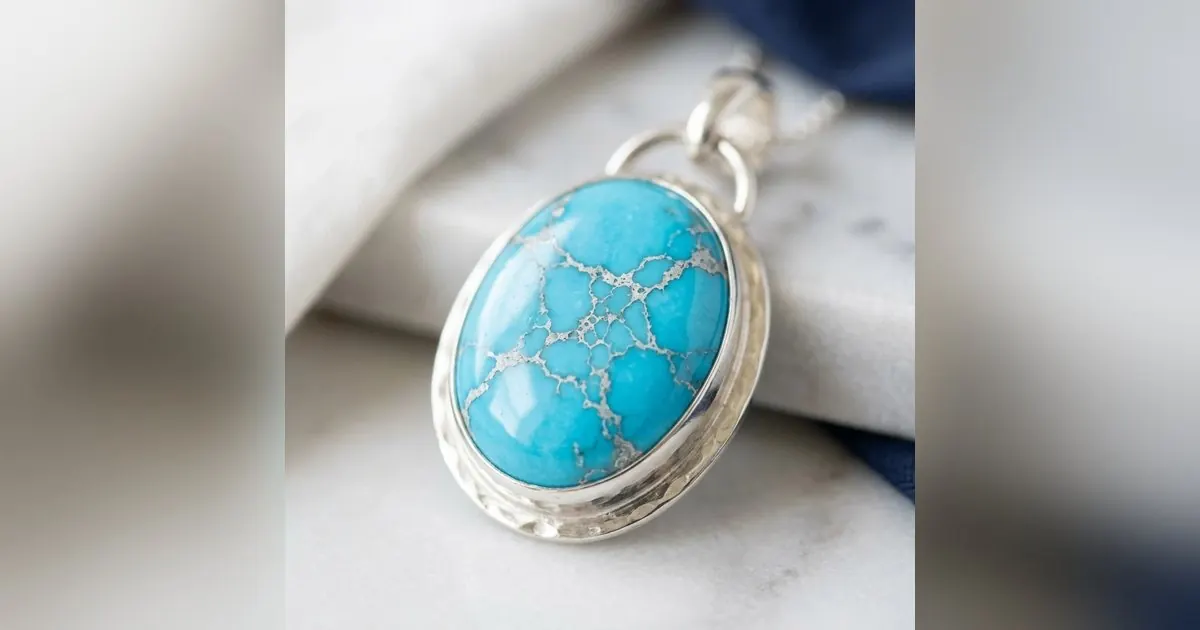
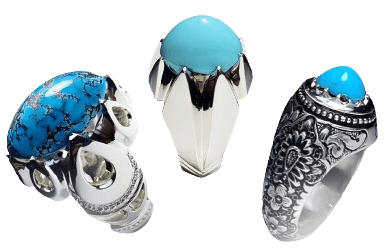
Turquoise with silver veins catches the eye straight away. Those shiny lines are usually not silver at all but pyrite, a brassy mineral that formed alongside the turquoise in its host rock. Other stones show brown, black or golden lines instead. This guide explains what the veins are, how they affect value and how to tell natural matrix from imitation.
What Are the Lines in Turquoise With Silver Veins
Turquoise forms in cracks and pockets of rock as copper rich water seeps through over long periods. The surrounding rock, called the matrix or host rock, often stays bonded to the turquoise. When the stone is cut and polished, that rock shows up as lines and patches.
In turquoise with silver veins, the bright metallic lines are usually pyrite, sometimes called fool’s gold. Under the polish, pyrite can look silvery or golden depending on the light. True silver veins in natural turquoise are extremely rare.
Turquoise With Matrix Explained
Matrix turquoise is simply turquoise that still carries some of its host rock. The matrix can be brown limonite, black chert, golden pyrite or grey quartz. Each type creates a different look.
When the matrix forms a fine web of lines across the stone, it is called spiderweb turquoise. A tight, even spiderweb pattern is highly prized and can make the stone worth more than plain blue material.
| Matrix Type |
How It Looks |
| Pyrite |
Silvery or golden metallic lines |
| Limonite |
Brown or rusty lines and patches |
| Chert |
Black, sharp lines |
| Quartz |
Grey or white areas |
| Spiderweb |
Fine connected web of any matrix colour |
This chart helps you name the pattern in any piece of turquoise with matrix you are considering.
Does Matrix Raise or Lower Value
It depends on taste and pattern. Many buyers prefer clean, even sky blue stones. Others love strong patterns. Fine spiderweb and attractive pyrite veins can add value, while patchy, crumbly matrix usually lowers it.
Matrix in turquoise also tells a story about where the stone came from. Different deposits produce different matrix colours and patterns, which is why experienced collectors can often recognise a source at a glance.
Colour still matters most. A vivid blue stone with neat silver veins is more desirable than a pale stone with heavy matrix.
How to Spot Fake Silver Veins
Some imitations are dyed howlite or magnesite with painted or glued lines. Others are reconstituted turquoise, made from powder and resin, with metallic flakes added to imitate pyrite.
Natural veins sit in the stone and follow its shape, usually with slight irregularity. Painted lines often sit on the surface and look too even. Very cheap, perfectly patterned stones deserve a closer look. Ask the seller whether the stone is natural, stabilised or reconstituted.
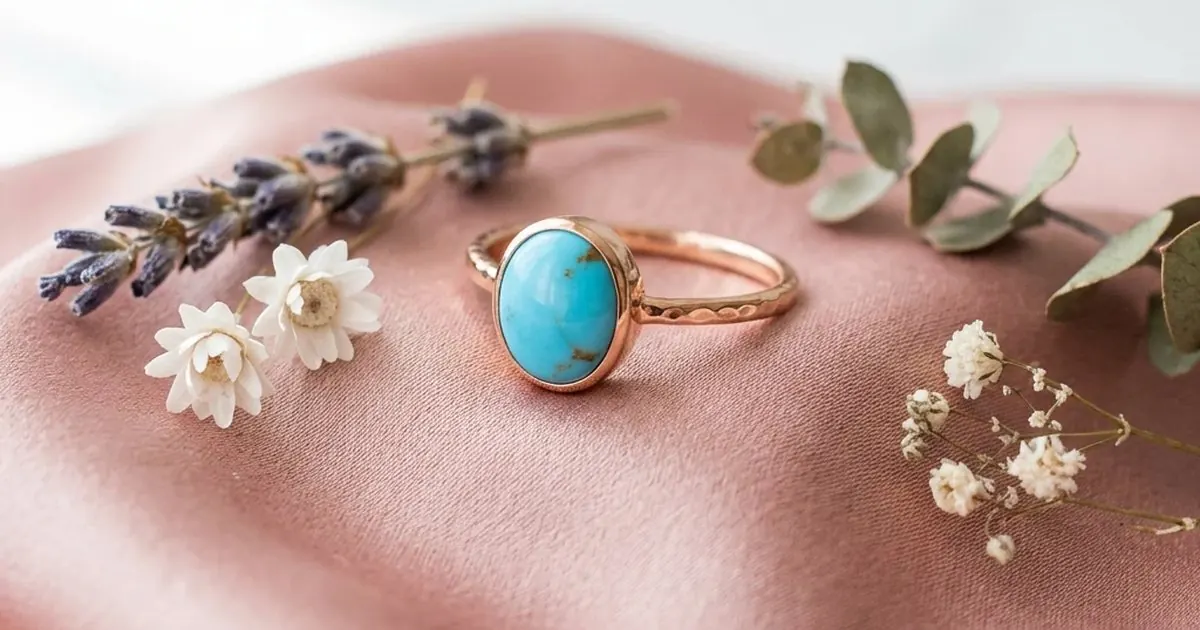
See how warm metals change the look in rose gold and turquoise, learn which finger to wear a turquoise ring, or browse our feroza and turquoise rings.
Shop Feroza Rings →
For more on how turquoise forms and its mineral make up, see the Britannica guide to turquoise.
Caring for Veined Turquoise
Matrix areas can be slightly softer or more porous than the turquoise itself. Keep the stone away from water, oils, lotion and perfume. Wipe it with a soft, dry cloth after wearing.
Silver settings suit veined stones especially well, because the metal echoes the bright lines in the matrix. Yellow gold works best with golden pyrite or brown limonite patterns.
Store veined turquoise on its own so harder stones do not scratch the polish. With gentle care, turquoise with silver veins keeps its contrast for many years.
Quick FAQ
Are the silver lines in turquoise real silver?
Usually not. They are most often pyrite, a metallic mineral that looks silvery or golden.
Is turquoise with matrix real turquoise?
Yes. Matrix is the natural host rock that formed with the turquoise.
What is spiderweb turquoise?
Turquoise with a fine, connected web of matrix lines across the surface.
Is matrix turquoise less valuable?
Not always. Attractive spiderweb or pyrite patterns can add value.
How to clean turquoise with silver veins?
Wipe with a soft dry cloth and avoid water, soap and chemicals.