What is Ceylon Sapphire? Complete Guide to Ceylon Sapphire Rings
If you are looking for a natural sapphire ring, there is one origin that gemologists, collectors, and jewelers consistently rank above all others. A Ceylon sapphire ring from Sri Lanka carries a reputation built over 2,000 years of mining history, royal collections, and museum-grade stones. This guide explains exactly what Ceylon sapphire is, why it commands the prices it does, and what to look for before you buy.
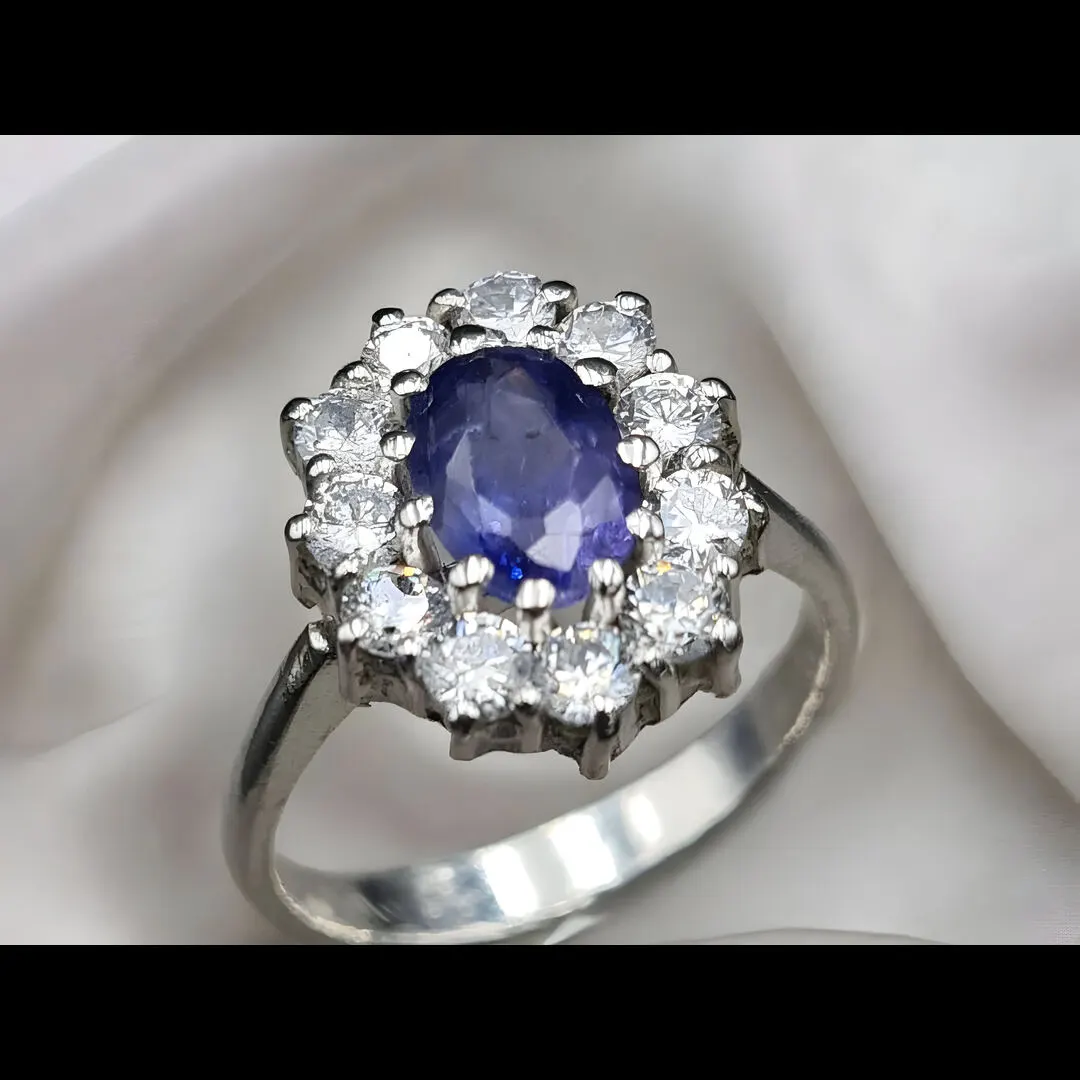
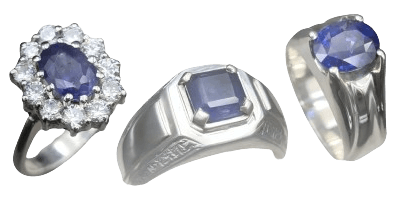
A Ceylon sapphire ring is set with a natural sapphire mined from Sri Lanka, the island nation formerly known as Ceylon under British colonial rule.
Sri Lanka has been producing sapphires for over 2,000 years. The island’s unique geological conditions create sapphires with color saturation, clarity, and brilliance that other origins consistently struggle to match.
Ceylon sapphires belong to the corundum mineral family. Their blue color comes from trace amounts of iron and titanium within the crystal structure. The result is the characteristic cornflower blue that gemologists worldwide consider the benchmark color for fine sapphire.
Colors of Ceylon Sapphire
Blue is the most famous color but Ceylon sapphires come in a wider range than most people realize.
Blue Ceylon Sapphire
The most prized variety. Color ranges from pale sky blue to deep cornflower blue with a slight violet undertone. The medium vivid cornflower blue is considered the ideal sapphire color and commands the highest prices in the market.
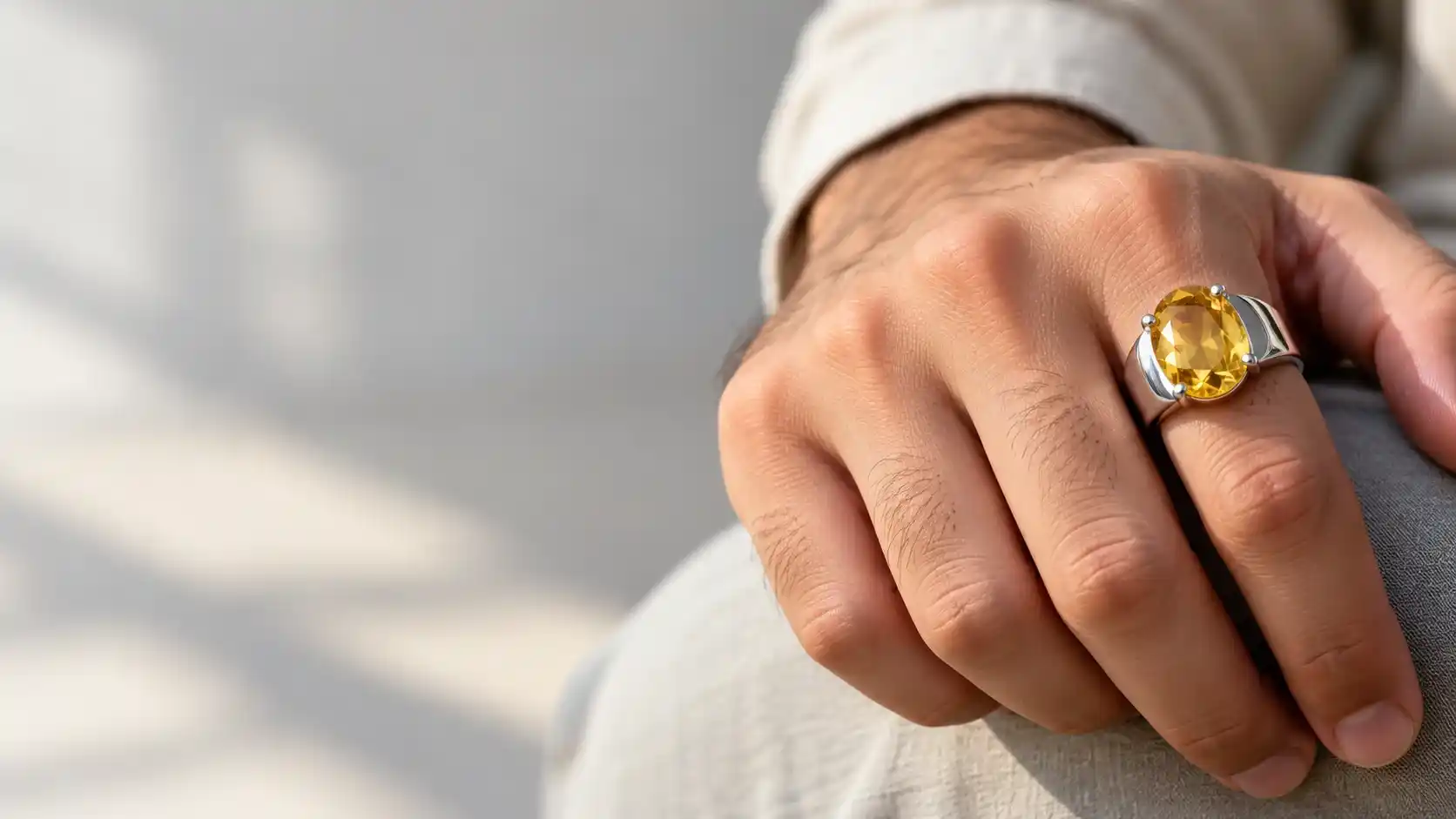
Yellow Ceylon Sapphire
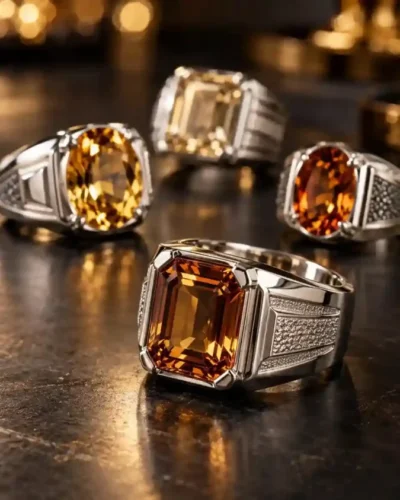
Known as pukhraj in South Asian tradition. Warm golden yellow with excellent clarity. One of the most popular choices for men’s rings in both Vedic and Islamic gemstone practice.
Pink Ceylon Sapphire
Ranges from delicate baby pink to vivid hot pink. Sri Lankan pink sapphires are known for their clean color without the orange secondary tones found in stones from other origins.
White Ceylon Sapphire
Colorless variety used as a natural diamond alternative. Hard, durable, and significantly more affordable than diamond while offering similar brilliance in a ring setting.
Padparadscha Sapphire
The rarest and most valuable Ceylon sapphire variety. A unique pinkish-orange color named after the lotus flower. Genuine padparadscha sapphires from Sri Lanka are among the most expensive colored gemstones in the world.
Why Is a Ceylon Sapphire Ring So Valuable
Several factors combine to make Ceylon sapphire rings consistently more valuable than sapphires from other origins.
Origin Premium
Sri Lanka’s geology produces sapphires in metamorphic rock conditions that result in exceptional color and transparency. The same conditions are not replicated anywhere else on earth at the same level of consistency.
Color Quality
The cornflower blue of a fine Ceylon sapphire is the color standard that the entire sapphire market is measured against. Stones from Kashmir, Burma, and Madagascar are compared to Ceylon blue as a reference point.
Clarity
Ceylon sapphires typically have fewer and less visible inclusions than sapphires from Burma or other origins. The natural silk inclusions present in Sri Lankan stones are characteristic but fine and do not significantly affect transparency.
Historical Significance
Some of the most famous sapphires in history are Ceylon stones. The Logan Sapphire, one of the largest faceted blue sapphires in existence, is a Ceylon stone. The Blue Belle of Asia, sold at auction for over $17 million, is also from Sri Lanka. That kind of provenance adds weight to every Ceylon sapphire ring on the market.
Summary Table
Feature
Detail
Origin
Sri Lanka (formerly Ceylon)
Mineral Family
Corundum
Color Agent
Iron and Titanium
Hardness
9 on Mohs scale
Signature Color
Cornflower blue
Other Colors
Yellow, Pink, White, Padparadscha
Treatment
Heated and unheated available
Certification
GIA, AGL available on request
Natural vs Heated Ceylon Sapphire
This is one of the most important distinctions when buying a Ceylon sapphire ring.
Most sapphires on the market have been heat treated. Heating improves color and reduces the visibility of inclusions. Treated stones are perfectly acceptable and widely sold by reputable jewelers. The treatment is stable and does not affect durability.
Unheated natural Ceylon sapphires are significantly rarer and more valuable. A fine unheated stone with GIA certification stating no heat treatment can command two to three times the price of a treated stone of similar size and color.
At RingsWear we offer both heated and unheated Ceylon sapphires. The treatment status is always clearly stated in the product description so you know exactly what you are buying.
How to Identify a Genuine Ceylon Sapphire Ring
Knowing what to look for protects you from overpaying for a stone that is not what it claims to be.
Ask for Certification
A GIA or AGL certificate stating Sri Lanka origin is the most reliable confirmation. The Gemological Institute of America uses advanced testing to determine geographic origin and treatment status. No certificate means no verified origin.
Check the Color
Genuine Ceylon blue sapphire has a vivid medium blue with a slight violet undertone. Stones that are too dark, too grey, or too inky are likely from Burma or other origins. Stones that are too pale may be low grade or from a different source entirely.
Look for Natural Silk
Under magnification, natural Ceylon sapphires often show fine rutile silk inclusions. These are thin needle-like inclusions that are characteristic of Sri Lankan stones. Their presence under a loupe is actually a positive sign of natural origin.
Buy From Verified Sellers
Only buy a Ceylon sapphire ring from a seller who offers certification on request and clearly states the origin and treatment status of every stone. Vague descriptions like “natural blue sapphire” without origin details are a red flag.
Shop Ceylon Sapphire Rings at RingsWear
Every Ceylon sapphire ring in our collection is set with a 100% natural earth-mined sapphire from Sri Lanka, handcrafted in solid 925 sterling silver.
We carry blue, yellow, and pink Ceylon sapphire options across a range of settings and styles. GIA certification is available on request for every stone we sell.
Explore our full Ceylon sapphire ring collection at RingsWear. We also carry ruby rings, emerald rings, and aqeeq rings, all natural and shipped free via FedEx from Northvale, New Jersey to the USA and UK.
FAQ
What is the difference between a Ceylon sapphire and a regular sapphire?
Ceylon sapphire refers specifically to sapphires mined in Sri Lanka. The origin matters because Sri Lankan geological conditions produce sapphires with a characteristic cornflower blue color, excellent clarity, and a brilliance that stones from Burma, Madagascar, or other origins do not consistently replicate. Ceylon origin is verified by gemological certification and commands a price premium in the market.
Is a Ceylon sapphire ring worth the price compared to other sapphires?
Yes, for buyers who value origin and quality. Ceylon sapphires are consistently ranked among the finest blue sapphires in the world by gemologists. The cornflower blue color, natural clarity, and 2,000 year mining history of Sri Lanka give these stones a standing in the market that justifies the premium over sapphires from less celebrated origins.
How can I tell if my Ceylon sapphire ring is genuine?
The most reliable way is GIA or AGL certification stating Sri Lanka as the country of origin. Without a certificate, look for the characteristic cornflower blue color, fine rutile silk inclusions under magnification, and strong transparency. Always buy from a seller who offers certification on request and clearly states treatment status in the product description.