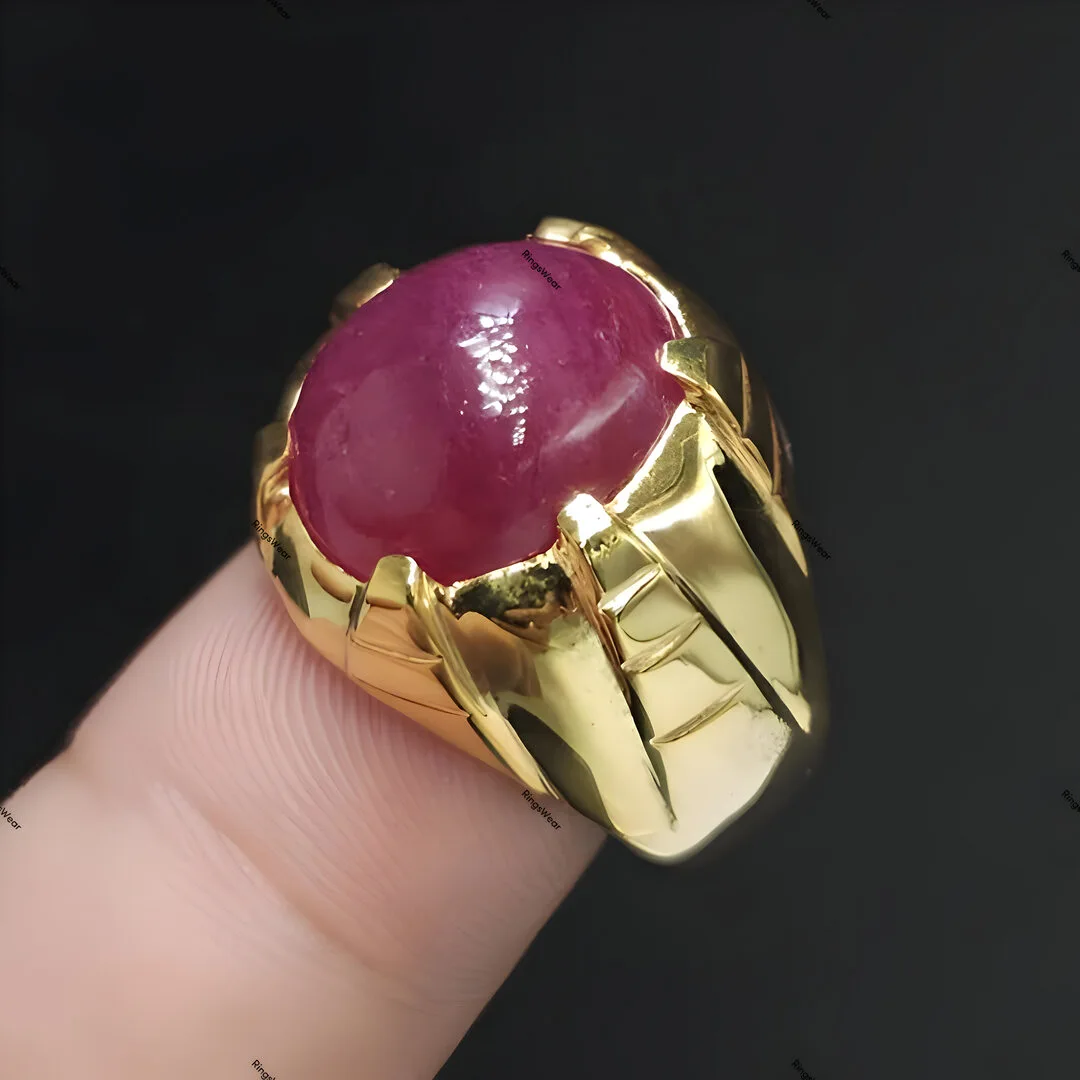
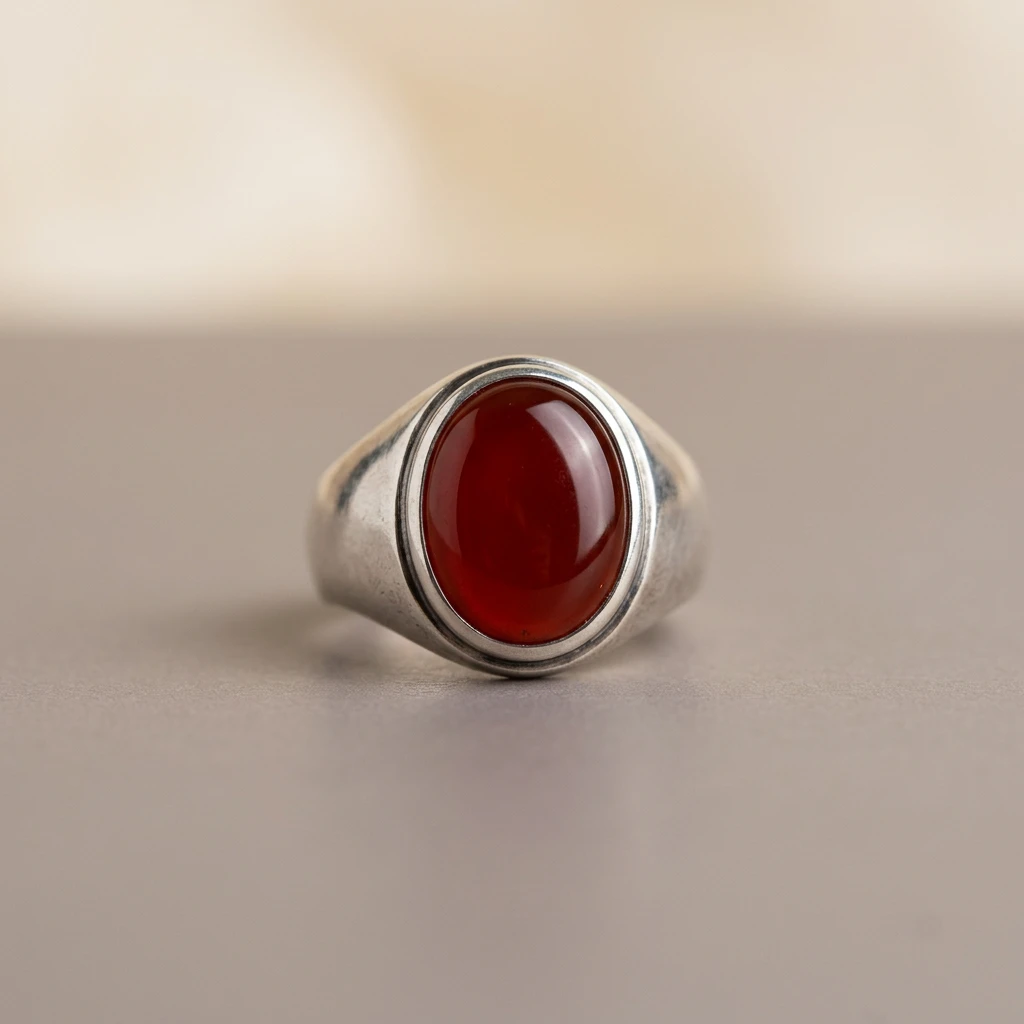
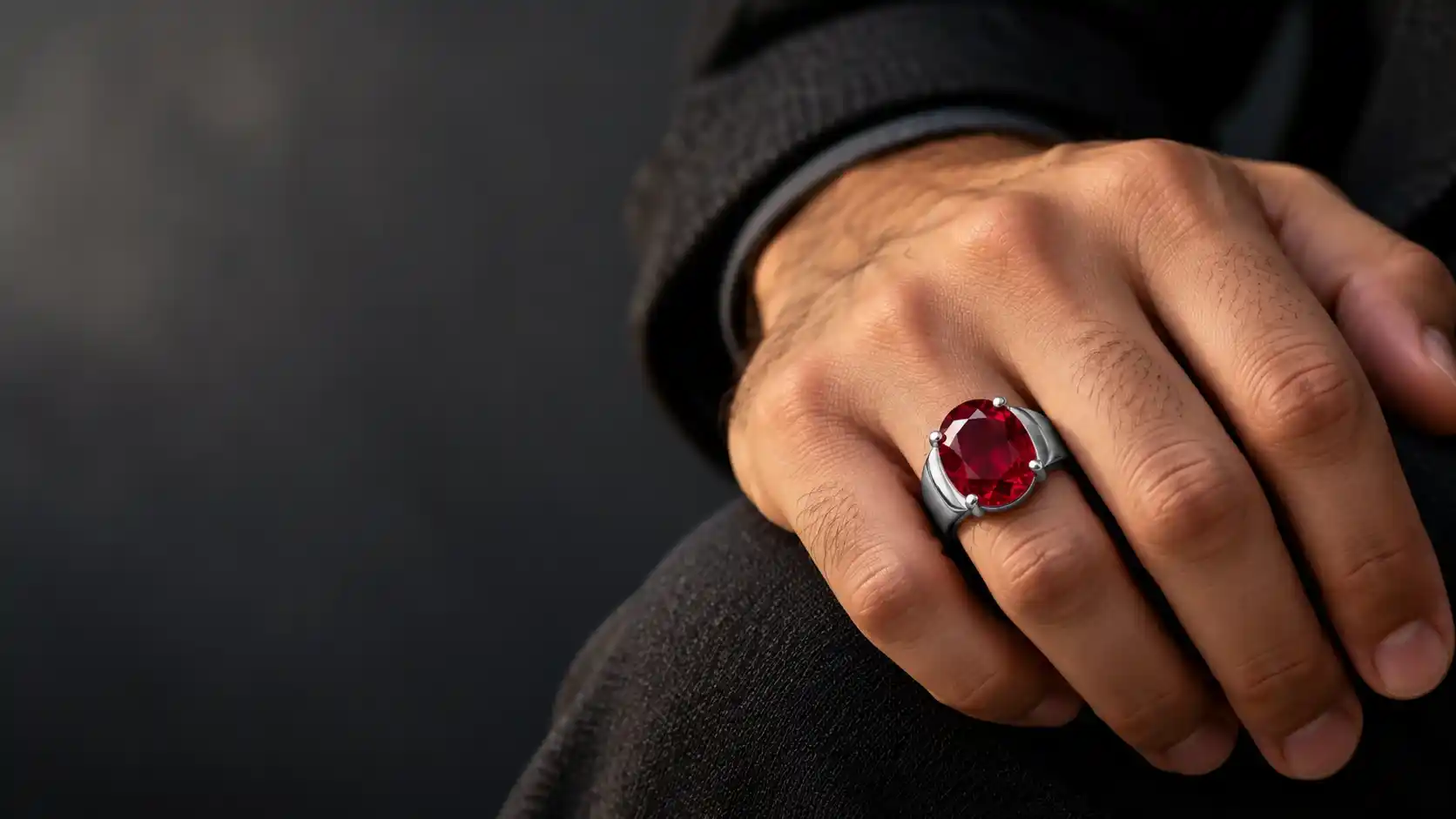
Natural Ruby vs Synthetic Ruby, How to Tell the Difference
The natural ruby vs synthetic ruby debate matters more than most buyers realize. Ruby is one of the most faked gemstones in the world. Walk into any jewelry market and the majority of red stones labeled as ruby are either synthetic, dyed glass, or a completely different mineral altogether. This guide explains exactly how to tell them apart so you never overpay for a stone that is not what it claims to be.
What Is a Natural Ruby
A natural ruby is a genuine gemstone formed deep within the earth over millions of years. It belongs to the corundum mineral family and gets its red color from trace amounts of chromium within the crystal structure.
Natural rubies are mined in Myanmar, Afghanistan, Thailand, Sri Lanka, and Mozambique. Each stone is completely unique. No two natural rubies are exactly alike in color, inclusion pattern, or character.
Rarity is the defining feature of a natural ruby. Fine quality stones with deep pigeon blood red color and good clarity are among the most valuable gemstones on earth per carat.
What Is a Synthetic Ruby
A synthetic ruby is a laboratory-created stone with the same chemical composition as a natural ruby but grown artificially in weeks or months rather than over millions of years in the earth.
Synthetic rubies were first produced in 1902 using the Verneuil flame fusion process. Since then several other methods have been developed including hydrothermal and flux growth techniques.
While a synthetic ruby looks similar to a natural one under normal viewing, it lacks rarity, uniqueness, and long-term value. It is a factory product, not a natural gemstone.
Natural Ruby vs Synthetic Ruby: Key Differences
Formation
A natural ruby forms over millions of years under intense heat and pressure deep within the earth. A synthetic ruby is grown in a laboratory in a matter of weeks. This difference in formation is what gives natural stones their unique inclusions, color zoning, and individual character.
Inclusions
This is the most reliable visual indicator in the natural ruby vs synthetic ruby comparison. Natural rubies contain characteristic silk inclusions, which are fine needle-like rutile patterns formed during the stone’s growth in the earth.
Synthetic rubies appear too perfect. They have very few or no natural inclusions. A stone that looks completely flawless under a loupe is almost certainly synthetic or glass.
Color Zoning
Natural rubies have slight variations in color distribution called color zoning. You can see subtle bands or patches of different color intensity within the stone when viewed under magnification.
Synthetic rubies have perfectly uniform color throughout. The color is too consistent, which is actually a warning sign rather than a positive quality indicator.
Price
Natural rubies are significantly more expensive due to their rarity. A fine natural ruby can cost thousands of dollars per carat. A synthetic ruby of the same size typically costs 90% less.
If a ruby ring is being sold at an extremely low price, it is almost certainly synthetic. Natural rubies are never cheap.
Value Over Time
Natural rubies appreciate in value over time, particularly fine quality unheated stones with certification. Synthetic rubies have little to no resale value. They are a consumer product, not an investment.
Certification
A natural ruby can be certified by the GIA or other recognized gemological laboratories. The certificate will confirm natural origin, treatment status, and quality. A synthetic ruby will be identified as lab-created on any legitimate certificate.
Summary Table
Feature
Natural Ruby
Synthetic Ruby
Formation
Millions of years in earth
Weeks in a laboratory
Inclusions
Natural silk inclusions present
Too perfect, few inclusions
Color Zoning
Subtle variations visible
Perfectly uniform
Price
Premium, reflects rarity
90% cheaper
Resale Value
Appreciates over time
Little to no resale value
Certification
GIA certified as natural
Certified as lab-created
How to Identify a Real Natural Ruby
Check for Natural Inclusions
Use a jeweler’s loupe at 10x magnification and look for fine needle-like silk inclusions. These are characteristic of natural rubies and are a positive sign of authenticity. A perfectly clean stone with no inclusions is a red flag.
Look for Color Zoning
Tilt the stone under a light source and look for subtle variations in color intensity. Natural rubies show color zoning. Synthetic ones look too uniform from every angle.
Check the Weight
Natural rubies feel slightly heavier than synthetic stones of the same size due to their natural mineral density. This is a subtle test but experienced buyers can feel the difference.
Ask for GIA Certification
The most reliable way to resolve the natural ruby vs synthetic ruby question is through a GIA certificate. According to the Gemological Institute of America, a certified gemologist can definitively identify whether a ruby is natural, heat treated, or synthetic using advanced spectroscopic testing.
Evaluate the Price
If the price seems too good for a natural ruby, it almost certainly is not one. Natural rubies command premium prices. A suspiciously cheap red stone ring is a reliable warning sign.
Buy from Reputable Sellers
Always buy from established sellers who provide certificates of authenticity, clearly state whether the stone is natural or treated, and offer GIA certification on request. Vague descriptions are a red flag.
What About Heat Treated Rubies
Most natural rubies on the market have been heat treated to enhance their color and clarity. Heat treatment is a widely accepted and disclosed practice in the gemstone industry.
Treated rubies are still genuine natural stones. The treatment simply improves the appearance of a stone that was already formed in the earth. This is very different from a synthetic ruby, which was never a natural stone to begin with.
Unheated natural rubies are the most valuable. They carry a significant premium over treated stones of similar size and color. At RingsWear we offer both heated and unheated natural rubies and always clearly state which type you are buying.
Why Choose Natural Ruby Over Synthetic
Every natural ruby is completely unique. No two are identical in color, inclusion pattern, or character. A synthetic ruby is a factory product produced in identical batches.
Natural rubies hold and appreciate in value over time. They can be certified, authenticated, and passed down as heirlooms. A synthetic ruby has no meaningful resale value and no story behind it.
If you are buying a ruby ring as a meaningful piece of jewelry rather than just a decorative item, there is no real comparison between natural ruby vs synthetic ruby. The natural stone wins on every measure that matters.
Shop Natural Ruby Rings at RingsWear
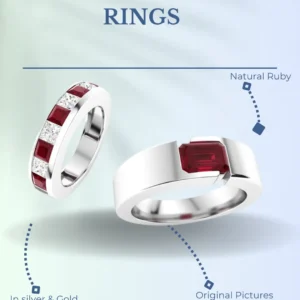
At RingsWear every ruby ring features a 100% genuine natural earth-mined ruby. We offer unheated natural ruby rings, pigeon blood ruby rings, Afghan ruby rings, and men’s ruby rings in 925 sterling silver.
GIA certification is available on request for every stone we sell. We also carry emerald rings, sapphire rings, and aqeeq rings, all 100% natural and shipped free via FedEx from Northvale, New Jersey to the USA and UK.
FAQ
Is a synthetic ruby worth buying or should I always choose natural?
It depends on your purpose. If you want a decorative red stone ring on a tight budget, a synthetic ruby is a practical option. But if you want a genuine gemstone with rarity, value, and meaning, a natural ruby is the only real choice. The natural ruby vs synthetic ruby difference comes down to what the stone actually is, not just how it looks.
Can you tell natural ruby vs synthetic ruby just by looking at it?
Not always with the naked eye. Under magnification, natural rubies show characteristic silk inclusions and color zoning that synthetic stones do not have. A perfectly uniform, flawless red stone is almost always synthetic. For definitive identification, GIA certification is the most reliable method.
Does heat treatment make a ruby synthetic?
No. Heat treatment is applied to natural rubies to enhance their existing color and clarity. The stone is still genuine and earth-mined. Synthetic rubies are grown entirely in a laboratory and were never natural stones. The two are completely different categories regardless of any treatment applied.