Can emeralds be different colors? Yes and no. Every true emerald is green, but that green ranges from light mint to deep forest and from yellowish to bluish. Other colours of the same mineral exist, yet they carry different names. This guide explains every shade, why it happens and how colour affects value.
Can Emeralds Be Different Colors
Emerald is the green variety of beryl. If a beryl crystal is not green enough, the trade does not call it emerald at all. So do emeralds come in different colors? Within green, absolutely. Outside green, no.
That is why you will see many emerald shades, but never a truly red or yellow emerald. When people mention those colours, they are usually talking about a related beryl gem or a marketing name.
The Range of Emerald Colors
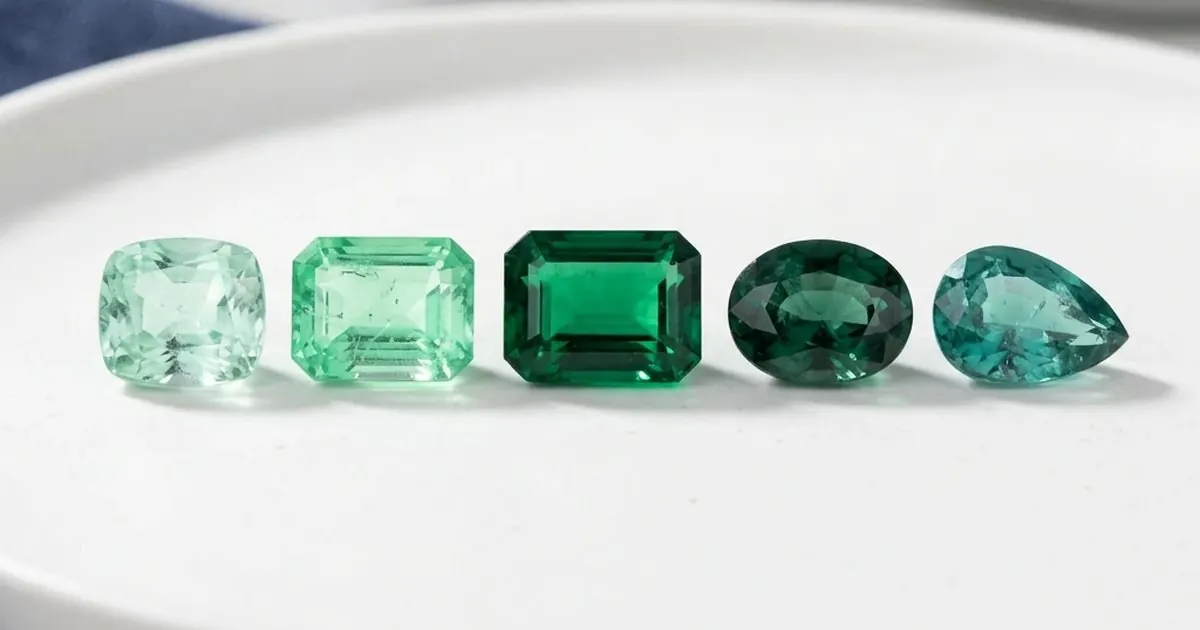
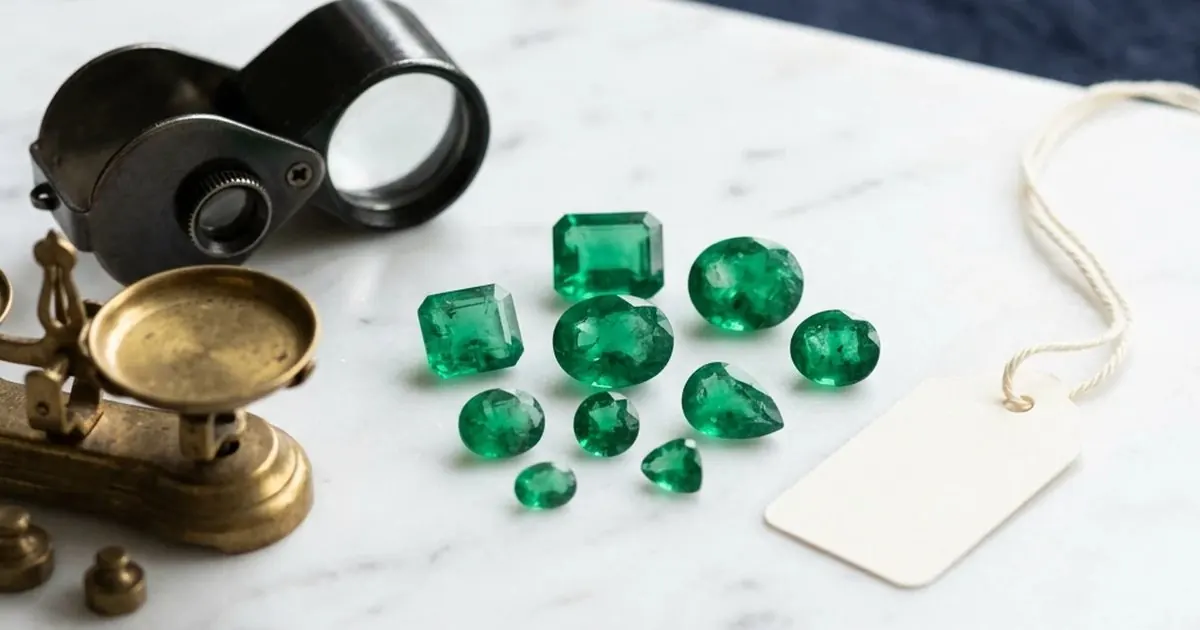
Gem experts describe emerald colors using three ideas: hue, tone and saturation. Hue is the basic colour, from yellowish green to bluish green. Tone is how light or dark it looks. Saturation is how strong the colour is.
A light emerald green stone has a pale, fresh look and costs less. A dark emerald with good saturation looks rich and velvety. Go too dark, though, and the stone can look almost black in dim light, which lowers its appeal.
The most prized emerald stone color sits in the middle: a vivid, slightly bluish green with medium to medium dark tone. That sweet spot is what most fine jewellery houses chase.
Blue Emerald and Blue Green Shades
Search for blue emerald and you will find two different things. The first is a real emerald with a strong emerald blue green colour, often seen in stones from Zambia. These are true emeralds with a cool tone.
The second is aquamarine, which is blue beryl. Some sellers call it blue emerald, but it is a different gem. So are there blue emeralds? A bluish green emerald, yes. A fully blue one, no, that stone is aquamarine.
| Beryl Colour |
Gem Name |
| Green beryl, strong colour |
Emerald |
| Blue beryl |
Aquamarine |
| Pink beryl |
Morganite |
| Yellow beryl |
Heliodor |
| Very pale green beryl |
Green beryl, not emerald |
This table shows why different color emeralds are really a family of separate gems. Only the green one earns the emerald name.
Why Emerald Shades Vary
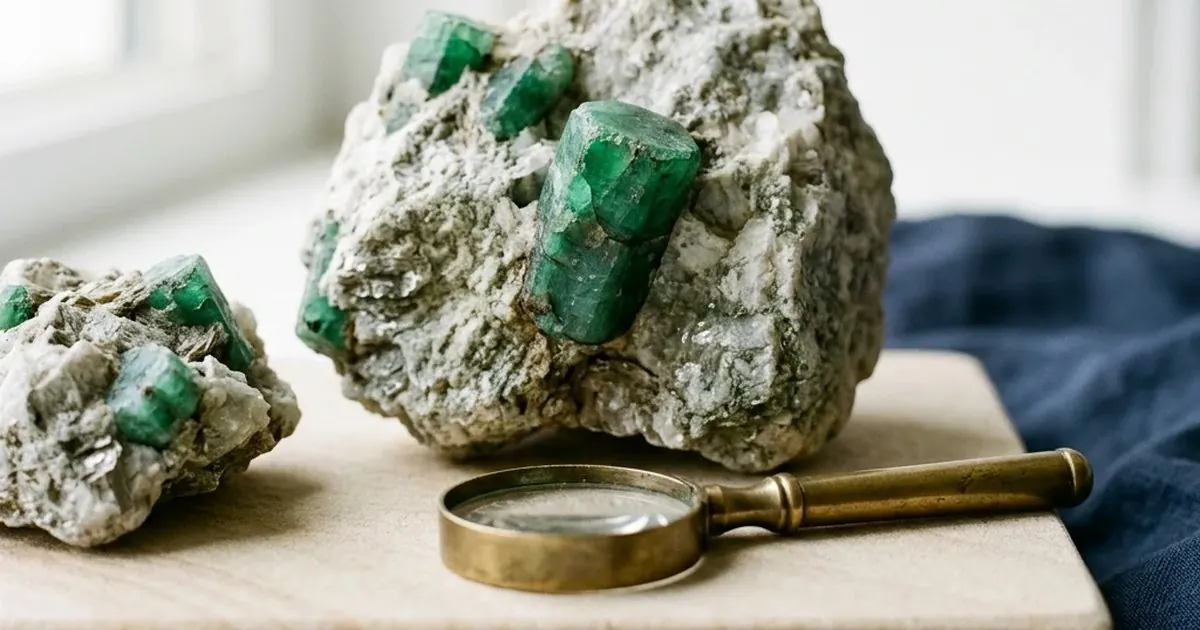
The green in emerald comes from trace elements, mainly chromium and vanadium. More of these elements usually means a stronger colour. A touch of iron can push the hue toward blue or yellow.
Where the stone formed also plays a part. Different deposits have different chemistry, so emeralds from one mine often share a recognisable shade. That is why dealers can sometimes guess the source from the colour alone, although only a lab can confirm it.
How Colour Affects Value
Colour is the biggest single factor in emerald price. A vivid, medium toned green sells for far more than a pale or very dark stone of the same size. Even small shifts in saturation can change the price per carat.
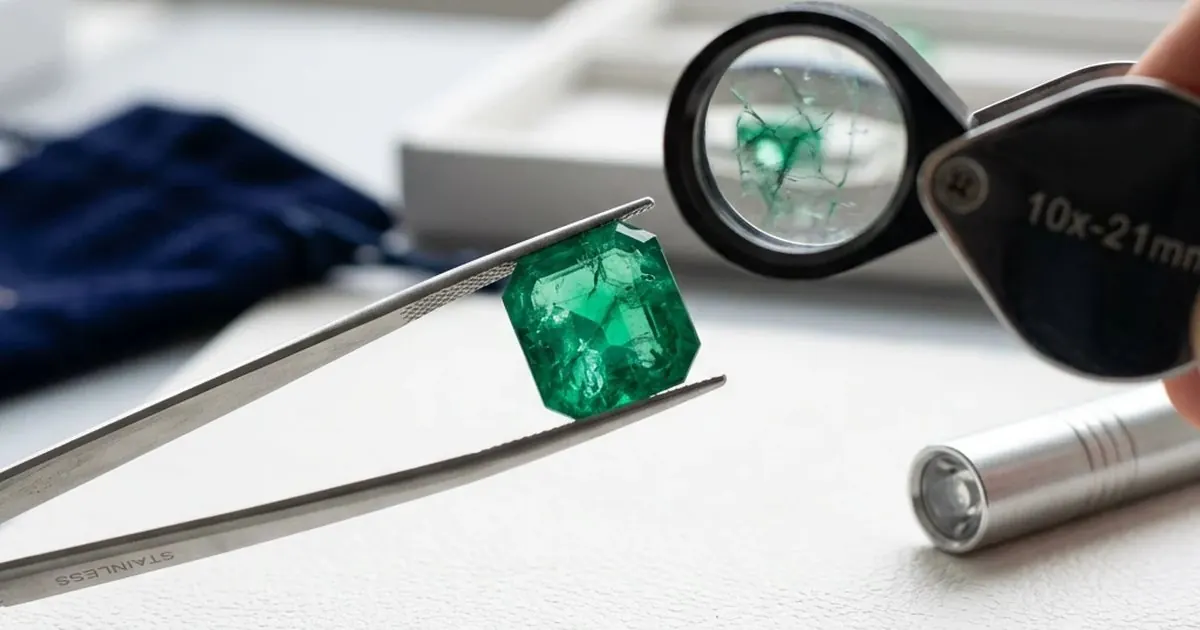
When you compare stones, view them in daylight and under warm indoor light. A good emerald holds its colour in both. A weaker one may look grey or washed out indoors.
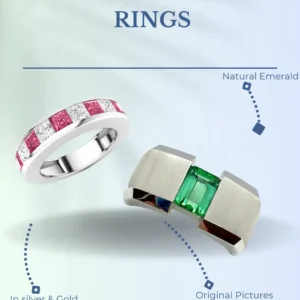
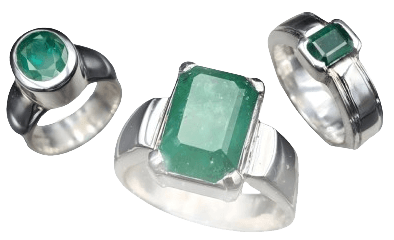
See how colour changes price in how much are emeralds worth, learn how to tell if an emerald is real, or browse our natural emerald rings in a range of greens.
Shop Emerald Rings →
Learn more about the beryl family and its colours in the International Gem Society beryl guide.
Choosing the Right Shade for You
Can emeralds be different colors and still look great? Yes. Lighter greens suit everyday rings and silver settings. Deeper greens look striking in gold. Bluish greens pair well with white metals.
Pick the shade you love most, then look for the best clarity and brightness you can afford in that colour.
Remember that photos online can shift colour a lot. Ask the seller for a video in daylight, and compare the stone against a white background. A short clip shows how the green moves as the ring turns, which a single photo can hide. It is the easiest way to judge emerald colors before you buy.
Quick FAQ
Are emeralds only green?
Yes. By definition an emerald is green beryl. Other colours of beryl have their own names.
Is a dark emerald better than a light one?
Not always. Medium to medium dark tones with strong colour are usually most valuable. Very dark stones can look black.
What is the rarest emerald colour?
A vivid, pure green with a slight blue tint and high transparency is the rarest and most expensive.
Can an emerald change colour?
No. The colour is stable, though lighting can make it look warmer or cooler.
Can emeralds be different colors in one stone?
Yes. Many emeralds show colour zoning, with lighter and darker bands of green in the same crystal.