Learning how to identify raw emerald starts with three clues: a six sided crystal shape, a true green colour, and the pale host rock it grows in. Rough stones look very different from the polished gems in a ring, so this guide walks you through what to look for, the tests you can do safely, and the lookalikes that fool beginners.
What Does Raw Emerald Look Like
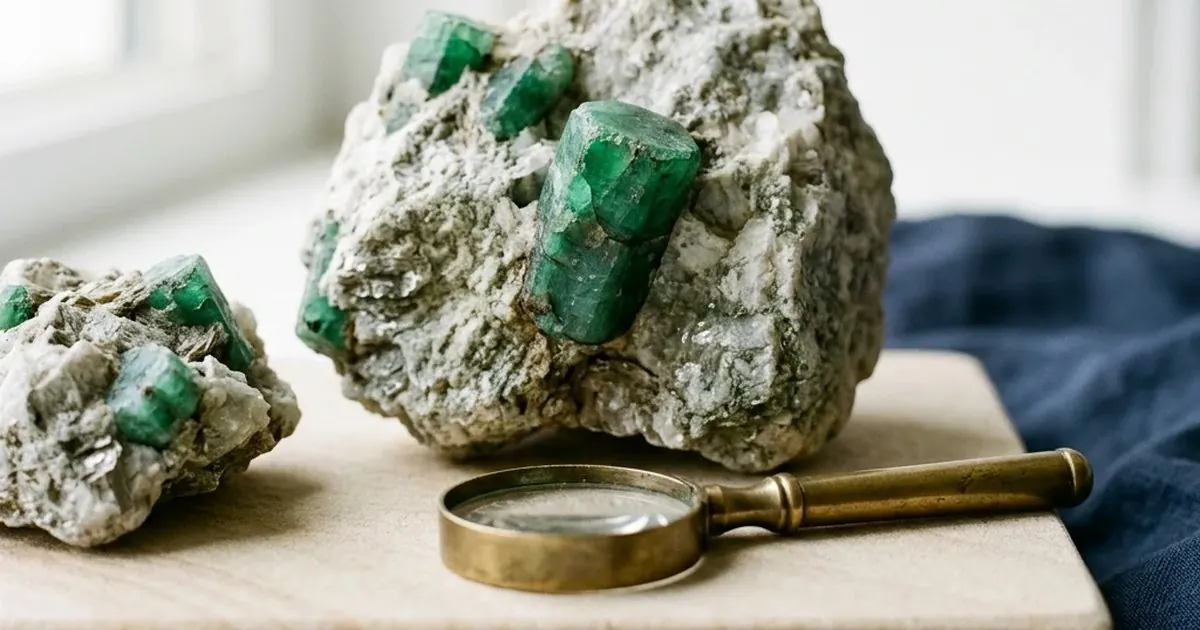
A raw emerald is a crystal of the mineral beryl, coloured green by tiny amounts of chromium or vanadium. In nature it usually grows as a six sided column, a little like a pencil with flat ends. The faces are often glassy, though the surface can look frosted or rough where the crystal has rubbed against rock.
Colour ranges from light green to deep bluish green. Most raw emerald stone is cloudy and full of fractures, and that is normal. Clear, deeply coloured rough is rare and is what cutters prize most.
How to Identify Raw Emerald Step by Step
Check the shape. Look for hexagonal columns with flat tops. Broken pieces may only show one or two flat faces, but the six sided outline is the strongest clue you have.
Check the colour. True emerald is green, not yellow green like peridot or minty like some fluorite. Hold the stone to daylight and look for a pure, slightly blue green tone.
Check the host rock. Emeralds often sit in white quartz, grey mica schist or dark shale. An emerald in matrix, still attached to its rock, is common at rock shops and helps confirm the find.
Check the hardness carefully. Emerald rates 7.5 to 8 on the Mohs scale, so it should scratch ordinary glass. Test only on a hidden edge, because fractured rough can chip.
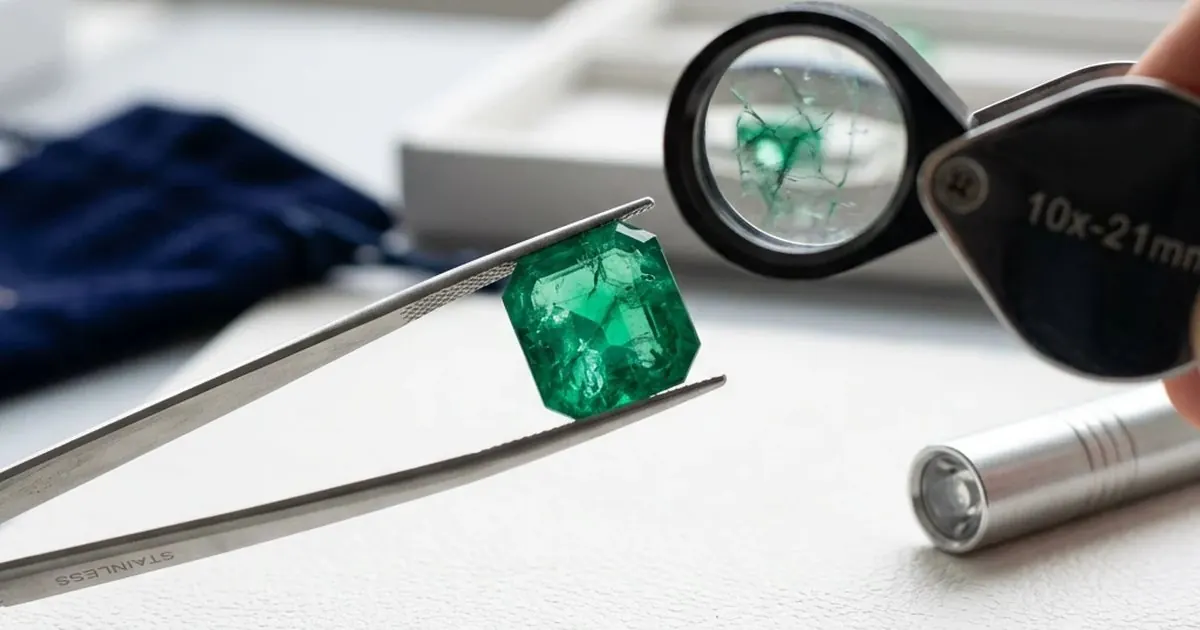
Check the inclusions. Under a loupe a rough emerald shows feathers, fluid pockets and tiny crystals. Perfectly clear green rough at a cheap price is often glass.
Green Rocks Often Mistaken for Emerald
Many green minerals are sold or found as raw emerald by mistake. Knowing the usual suspects saves money and disappointment.
| Lookalike |
How to Tell It Apart |
| Green fluorite |
Cubic or octahedral shape, much softer, scratches easily |
| Green apatite |
Six sided too, but softer at 5 on the Mohs scale |
| Green tourmaline |
Long striated crystals with a rounded triangle outline |
| Peridot |
Olive or yellow green, grainy pebbles, no columns |
| Green glass |
Bubbles, swirls and a perfectly even colour |
If a piece passes the shape, colour and hardness checks, you have a strong candidate. A gem lab can confirm it in minutes.
Uncut Emerald Value and Quality
People often ask how much is a raw emerald worth. Most rough emerald is low grade and sells by the gram for modest amounts, because so much weight is lost when it is cut. An uncut emerald that is transparent and richly coloured is a different story and can be worth a great deal per carat.
Look at three things when you judge rough: depth of colour, how much of the crystal is see through, and how many cracks run across it. A raw emerald crystal with good colour but heavy fractures is better kept as a specimen than cut into a gem.
Natural Raw Emerald Rock vs Cut Gems
A natural raw emerald rock makes a striking display piece, and many collectors prefer it to a cut stone. Rough emerald specimens also teach you more about how to identify raw emerald than any photo can. Rough crystals still attached to schist or quartz show exactly where the gem was born.
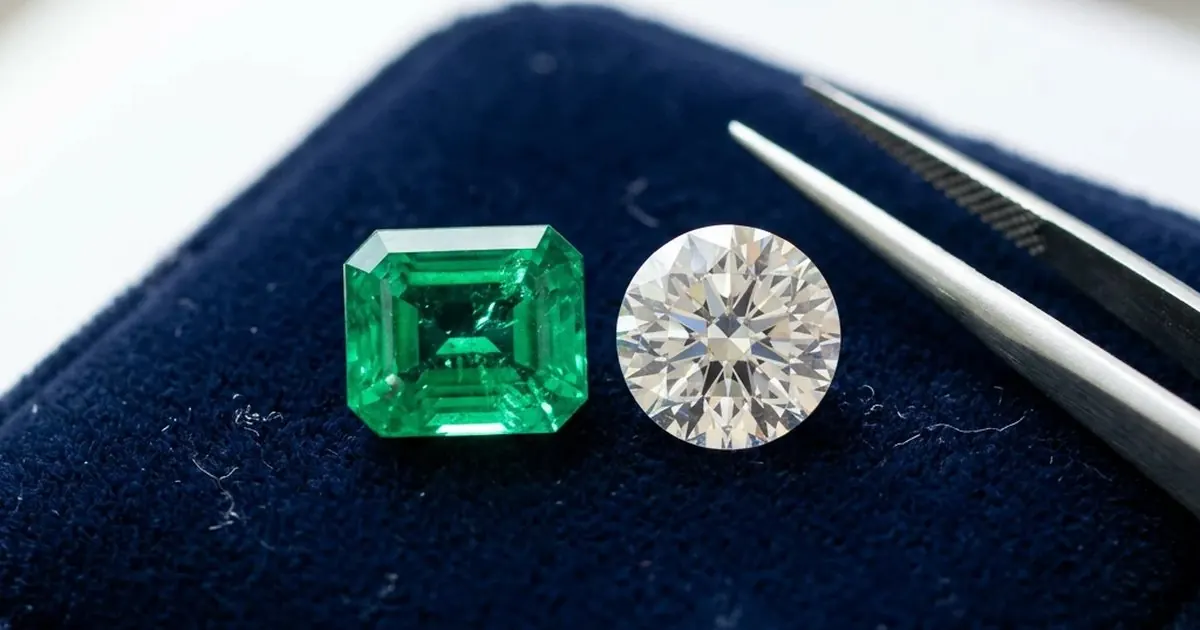
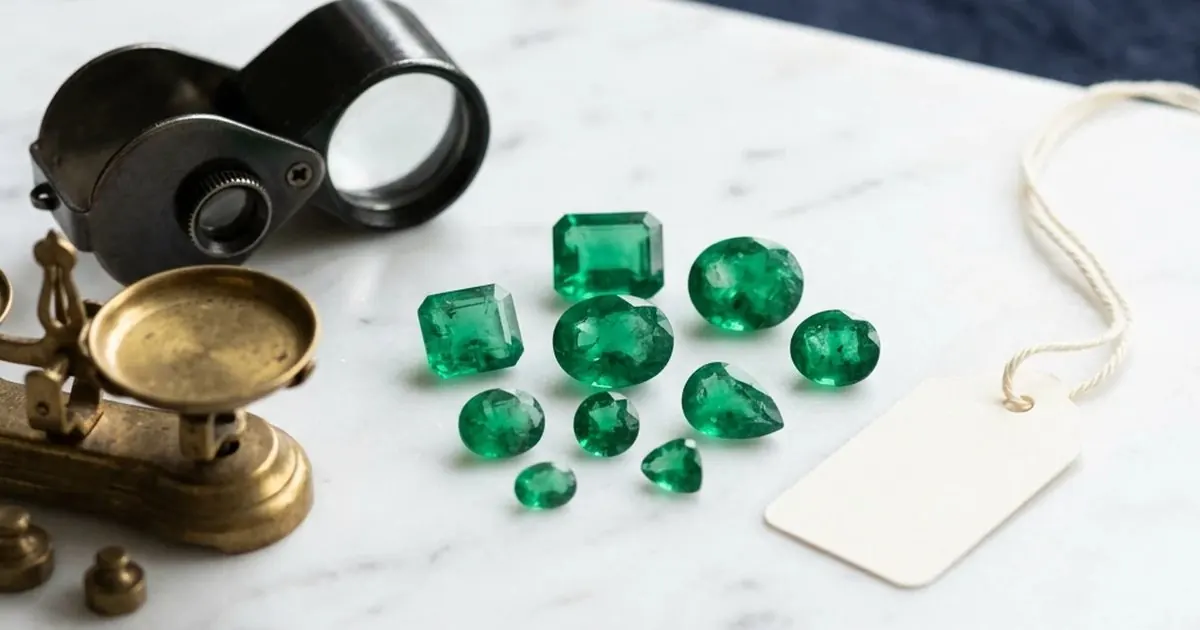
Cut emeralds tell a different story. The cutter removes the cloudy, broken parts and keeps the best colour, which is why a finished gem looks brighter and cleaner than the rough it came from.
Once you know the basics, learn how to tell if an emerald is real after cutting, read about where emeralds come from, or browse our natural emerald rings.
Shop Emerald Rings →
Emerald is a variety of beryl. Read more about the mineral family in the Britannica guide to beryl.
Tips for Safe Testing
Never use acid, heat or a hammer on a suspected emerald. Many rough stones are already fractured and can split. A loupe, daylight, a steel file used gently on a hidden spot and a kitchen scale are all you need for a first look.
Now that you know how to identify raw emerald, take clear photos in daylight and keep notes on where each piece came from. That record makes a lab check quicker and helps if you ever decide to have a stone cut.
Quick FAQ
Is raw emerald shiny?
Crystal faces can look glassy, but many raw emeralds look dull or frosted until they are cut and polished.
Can you find raw emerald in a river?
Rarely. Emerald is not as common in gravels as some gems, because it is often fractured and breaks down before it travels far.
What colour is raw emerald?
Light to deep green, sometimes slightly bluish. Pale green beryl with very little colour is not usually called emerald.
Does raw emerald glow under UV light?
Some emeralds show a weak red glow under UV light, but many do not, so UV alone cannot identify one.
How to identify raw emerald from glass?
Look for natural inclusions, a six sided crystal outline and host rock. Glass usually shows bubbles and has no crystal faces.