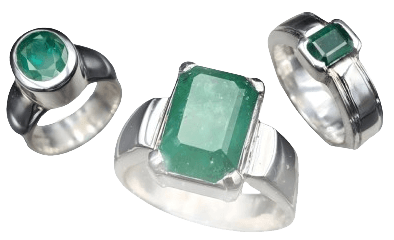
Want to know how to tell if an emerald is real? Start by looking inside the stone. A natural emerald almost always shows tiny inclusions, soft colour zoning and a calm glow, while glass and many imitations look too clean or too bright. Below are seven simple checks you can do at home, plus when to ask a professional.
What Does Real Emerald Look Like
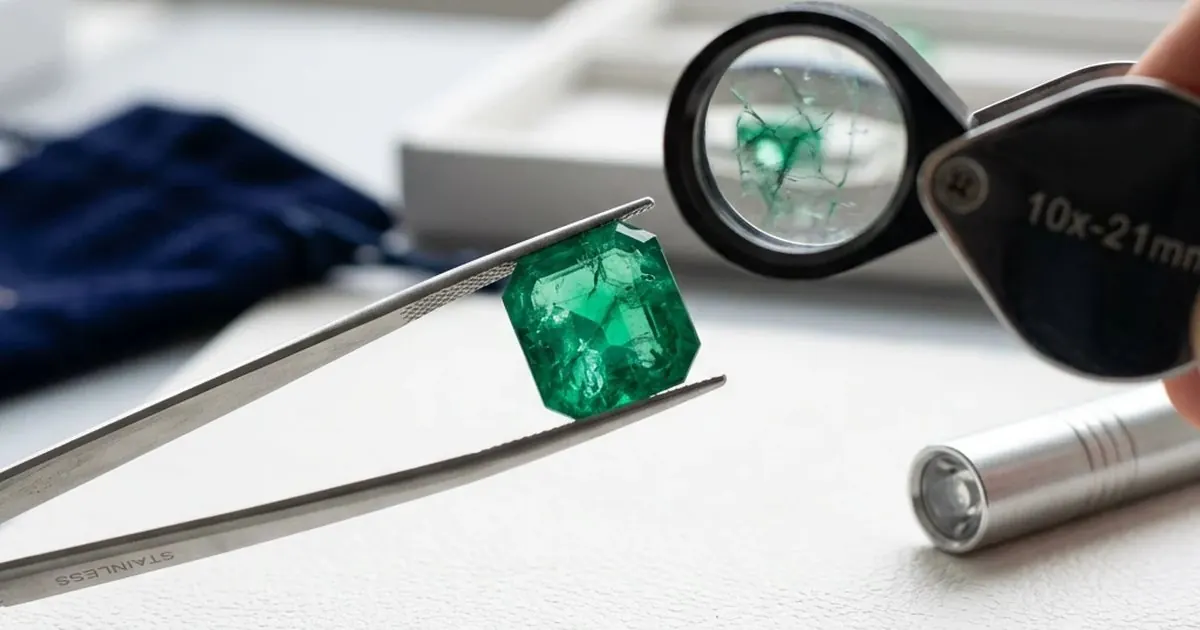
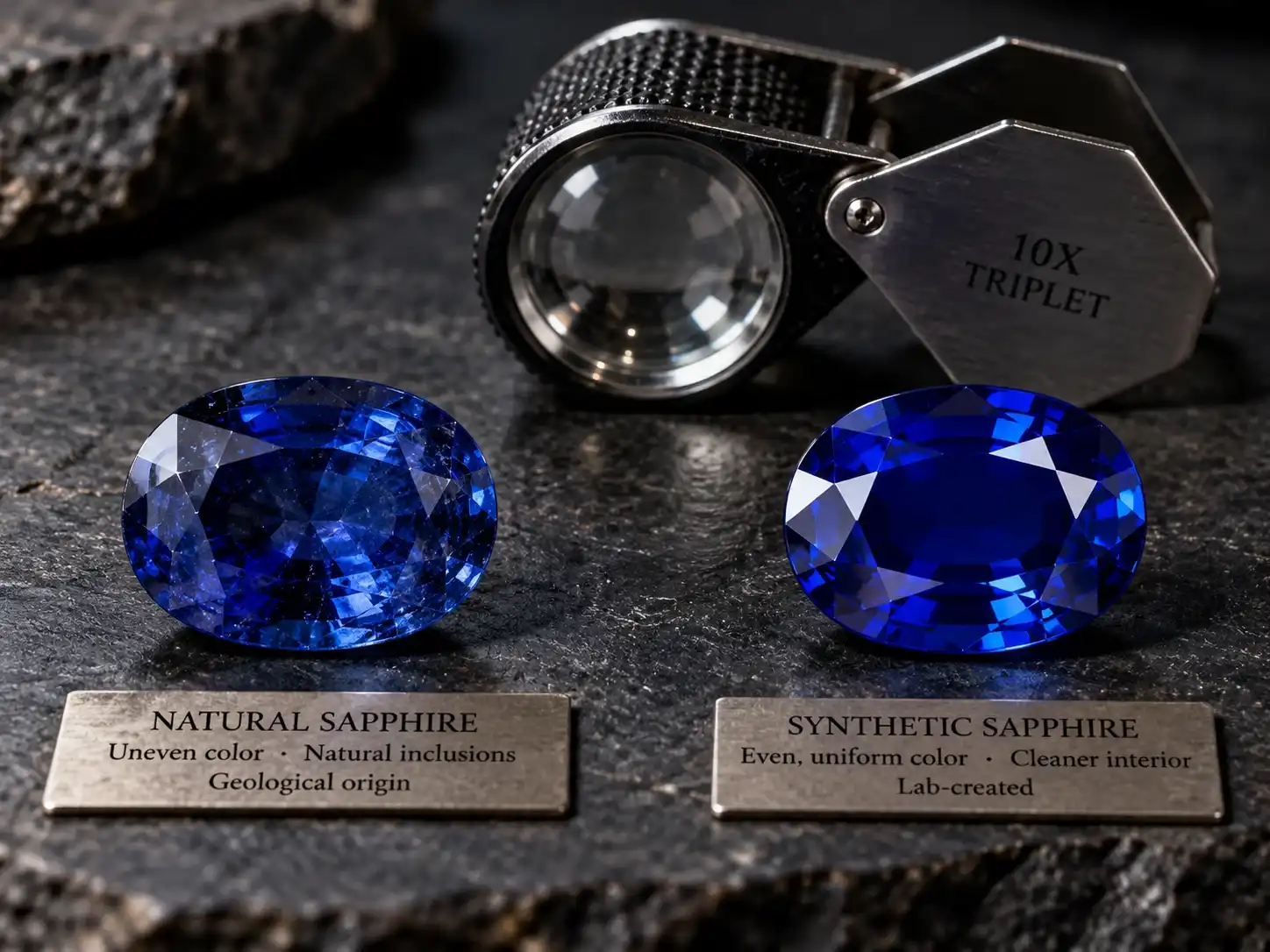
A real emerald shows a rich green that can lean slightly blue or slightly yellow. Look closely and you will usually see tiny feathers, crystals or wispy lines inside. Jewellers call this the jardin, the French word for garden, and it is one of the best signs you are holding a natural stone.
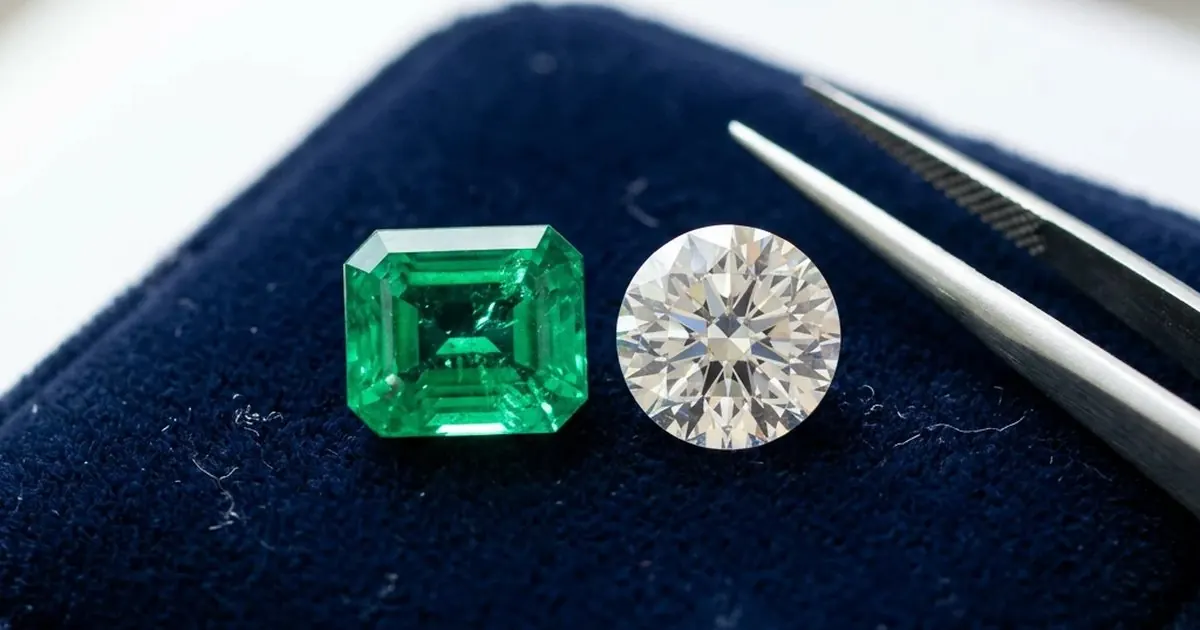
Real emerald also has a soft, velvety glow rather than fiery sparkle. Diamonds flash with rainbow colours. Emeralds glow green from within.
How to Tell if an Emerald Is Real at Home
Use a 10x loupe or a phone camera on zoom. Inclusions that look like tiny gardens or fingerprints point to a natural stone. Round gas bubbles point to glass.
Check the colour. Natural emerald often shows faint zones of lighter and darker green. Perfectly even colour in a large, cheap stone is a warning sign.
Watch the sparkle. Strong rainbow flashes suggest glass, cubic zirconia or another material, not emerald.
Feel the temperature. Real gemstones feel cool for a moment against your lip or cheek. Glass and plastic warm up quickly.
Look for wear. Emerald is hard at 7.5 to 8 on the Mohs scale, so it resists scratches. Heavy scuffing on facet edges can point to glass.
Check the price. A large, vivid green stone sold for a few dollars is almost never a fine natural emerald. If the deal looks too good, it usually is.
Common Fake Emerald Types
Green glass is the most common fake emerald. It is cheap, often very clean, and usually shows round bubbles or swirl marks under a loupe. It also warms up quickly in the hand.
Doublets and triplets are trickier. They join a thin layer of real material or quartz to a green layer, so the top may pass a quick look. Turn the stone sideways and look for a flat join line around the girdle.
Other green stones are sometimes sold as emerald by mistake, including green garnet, peridot, green tourmaline and dyed quartz. Each has its own colour and sparkle, which is why learning how to tell if an emerald is real saves money even when the seller means well.
Real Emerald vs Fake Side by Side
Knowing how to tell real emerald from fake is easier with a quick comparison.
| Question |
Short Answer |
| Inclusions |
Natural: garden like. Glass: round bubbles |
| Colour |
Natural: slight zoning. Fake: too even |
| Sparkle |
Natural: soft glow. Fake: rainbow fire |
| Price |
Fine natural emerald is never bargain priced |
| Lab created emerald |
Very clean, needs a lab to confirm |
This real emerald vs fake table covers the common imitations: green glass, doublets made of quartz with a green layer, and dyed stones.
Lab Created Emerald and When to Get Tested
A lab created emerald is chemically the same as natural emerald, so home tests cannot separate them. Synthetic stones are often unusually clean and may show wavy or flame shaped growth lines under magnification. A gem lab can confirm the origin with a refractometer and microscope in minutes.
So how to tell if emerald is real when the stone is valuable? Ask for a report from a recognised laboratory. It costs far less than buying the wrong stone.
Learn more about what affects price in how much are emeralds worth, follow our general guide to checking any gemstone ring, or browse our natural emerald rings.
Shop Emerald Rings →
For lab level identification methods, see the GIA emerald overview.
Buying With Confidence
Are emeralds real when they come from a trusted seller? They should be, and a good seller will state the treatment openly. Most emeralds are oiled to soften surface fissures, which is normal. The key is honest disclosure.
Now you know how to tell if an emerald is real, keep your checks simple: look inside, check the colour, judge the sparkle, and confirm big purchases with a lab.
Quick FAQ
Do real emeralds have inclusions?
Almost always. Natural emerald nearly always shows some inclusions, and a perfectly clean stone at a low price deserves a closer look.
Can you test an emerald with a flashlight?
A light helps you see inclusions and colour zoning, but it cannot prove a stone is natural on its own.
Is a fake emerald heavier or lighter?
It depends on the material. Some glass is lighter than emerald and some is heavier, so weight alone is not a reliable test.
Does a real emerald scratch glass?
Yes, emerald is harder than glass, but scratch tests can damage the stone, so we do not recommend them.
How to tell if an emerald is real in a ring?
Use a loupe through the open back of the setting, look for natural inclusions, and ask the seller for a lab report.