A different types of turquoise chart helps you understand why two turquoise stones can look so different. Turquoise varies by colour, by matrix pattern and by how it has been treated, and each changes the look and value. This guide brings the main types into one simple chart, then explains how to identify each one.
Colors of Turquoise Stone
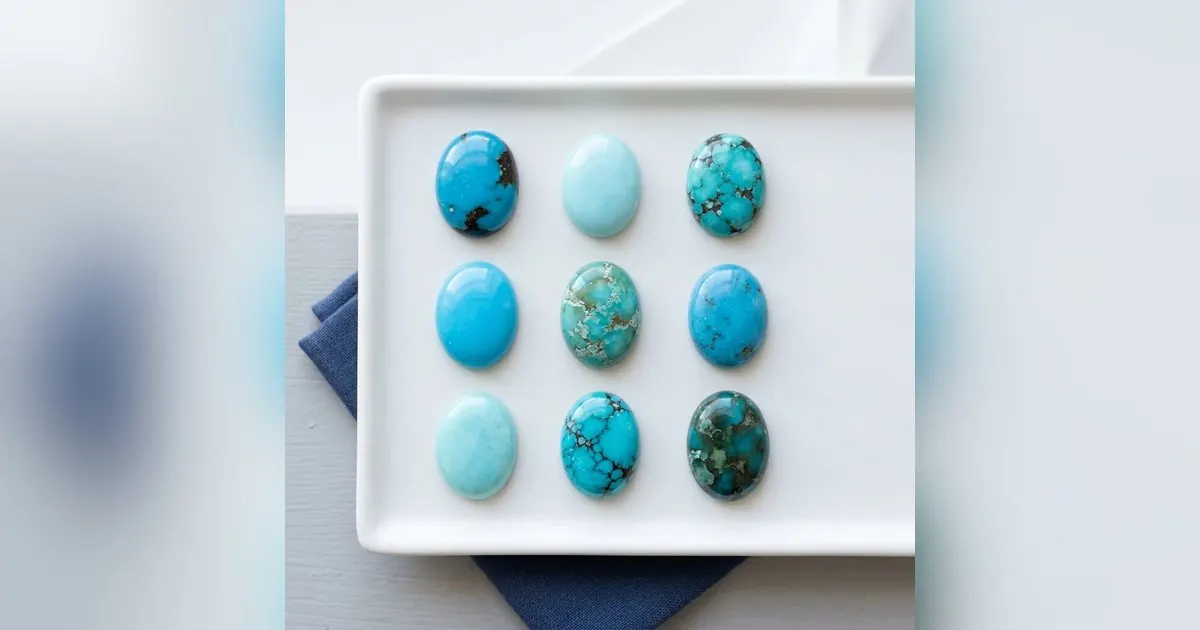
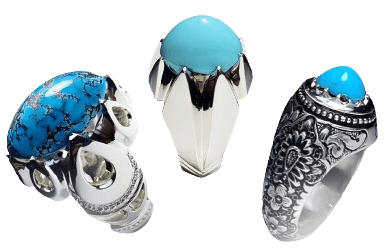
Turquoise ranges from pale sky blue to deep robin egg blue and on to green. The colour comes from copper and iron. More copper pushes the stone toward blue, while more iron pushes it toward green.
Colour can also change slightly over time. Natural turquoise that has not been stabilised is porous and can absorb skin oils, slowly shifting toward green. Stabilised stones hold their colour much better.
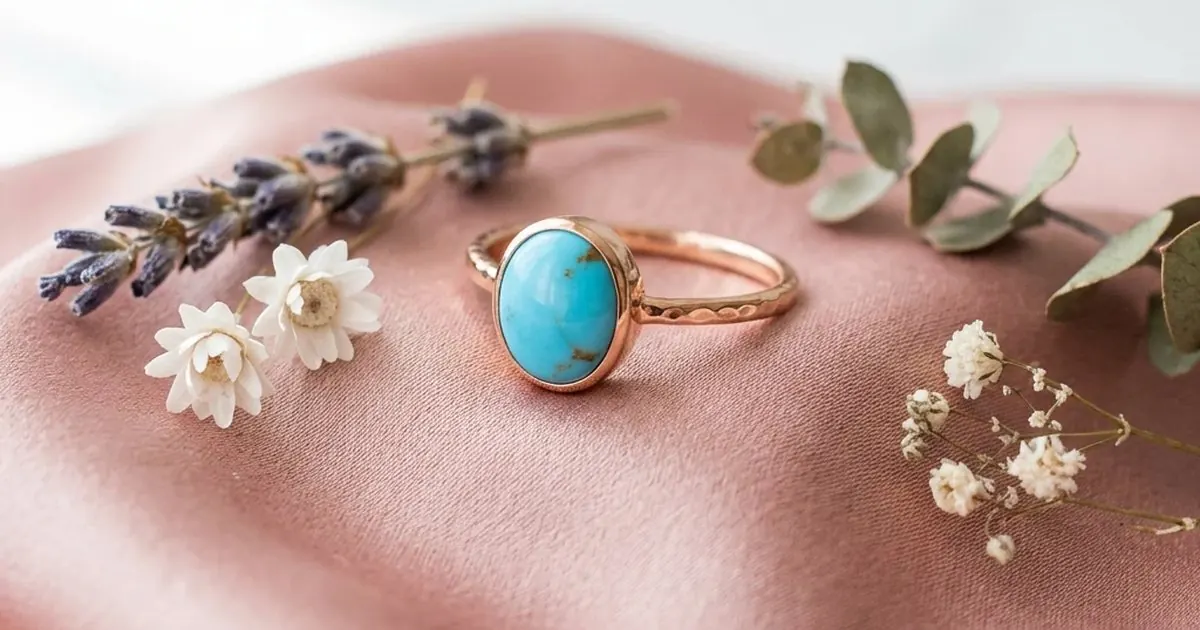
Sky blue is the most famous and often the most prized. Green turquoise has its own following and can be just as beautiful, especially in yellow gold or vintage style rings.
Different Types of Turquoise Chart
Here is a quick chart covering the main types by colour, pattern and treatment.
| Type |
What You See |
| Sky blue |
Even light to medium blue, little or no matrix |
| Deep blue |
Rich, saturated blue, very desirable |
| Green blue |
Blend of blue and green tones |
| Green |
Iron rich, olive to apple green |
| Spiderweb |
Fine web of matrix lines |
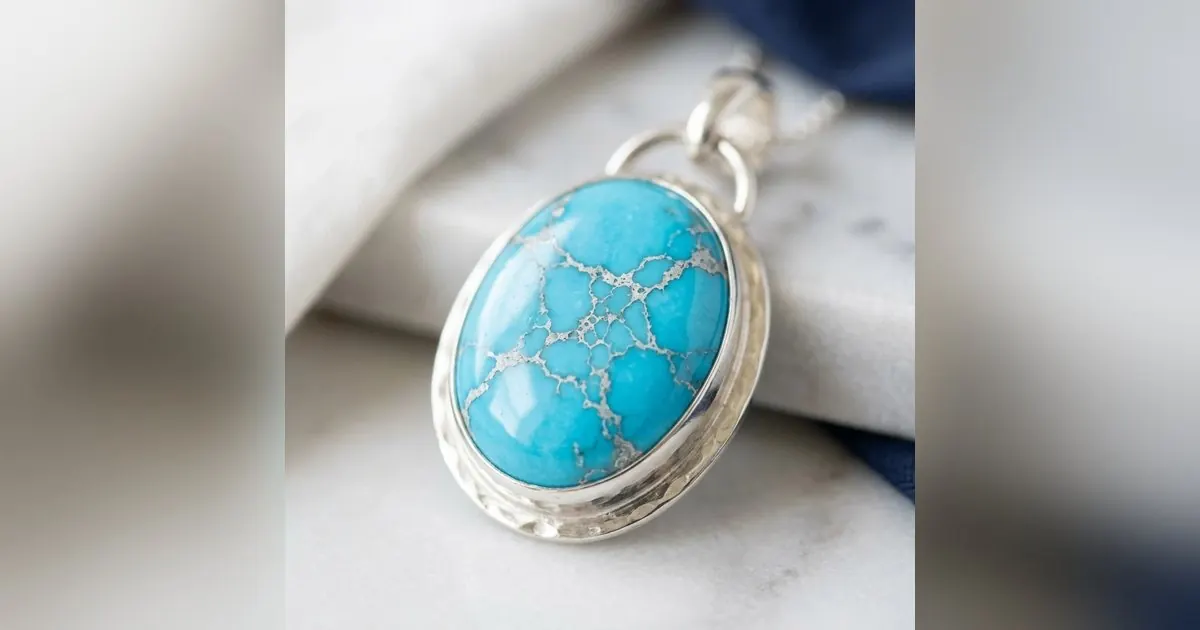
| Matrix with pyrite |
Silvery or golden metallic veins |
| Stabilised |
Natural stone hardened with resin |
| Reconstituted |
Turquoise powder pressed with resin |
| Imitation |
Dyed howlite, magnesite or plastic |
This different types of turquoise chart covers what most buyers will meet in shops and online.
Natural, Stabilised and Reconstituted
Natural turquoise is left as it formed apart from cutting and polishing. Hard, high grade natural material is rare and costly.
Stabilised turquoise is natural stone that has been infused with clear resin to harden it and deepen the colour. It is common, accepted and good for everyday wear, but it should be disclosed. Reconstituted turquoise is made from powder and chips bonded with resin, and it is worth much less.
Using a Turquoise Identification Chart
A turquoise identification chart usually combines colour, matrix and feel. Natural turquoise often shows slight colour variation and a matrix that follows the stone’s shape. Dyed howlite tends to show white patches where dye did not reach, and its lines often look dark grey.
Weight and feel help too. Natural turquoise feels cool and slightly waxy. Plastic imitations feel warm and light. Hold a known natural stone next to the one you are checking if you can.
A simple check is to look closely at drill holes and edges. Imitations sometimes show a different colour inside. For valuable pieces, ask the seller what the stone is and how it has been treated.
Learn about matrix in turquoise with silver veins, read where turquoise is found, or browse our feroza and turquoise rings.
Shop Feroza Rings →
For the chemistry and history of the stone, see the Wikipedia article on turquoise.
Turquoise Value Chart Basics
A turquoise value chart usually ranks stones by colour, hardness, matrix and treatment. Hard, natural, deep blue stones with attractive or no matrix sit at the top. Stabilised stones sit in the middle. Reconstituted and imitation stones sit at the bottom.
Price also depends on size and cut. Large, even cabochons with deep colour are much harder to find than small stones, so they carry a higher price even within the same grade.
For a ring you will wear often, a well made stabilised stone can be a smart, durable choice. For a collector piece, natural stones with strong colour are worth the extra cost. Keep this different types of turquoise chart handy when you compare stones side by side.
Quick FAQ
What is the most valuable type of turquoise?
Hard, natural, deep blue turquoise with even colour or fine spiderweb matrix.
Is green turquoise real?
Yes. Green turquoise contains more iron and is a natural variety.
Is stabilised turquoise real turquoise?
Yes. It is natural turquoise hardened with resin, which is a common treatment.
How can I tell fake turquoise?
Look for white patches, dye in cracks and even, painted lines. Ask the seller to confirm the material.
What do the colors of turquoise stone mean?
Blue comes from copper, green from iron. Both are natural.