Emerald Gemstones: Origin, and Why They’re So Desirable
Emerald gemstones have been prized for thousands of years. Cleopatra wore them. Mughal emperors engraved them. Today they remain one of the most valuable and recognizable gemstones in the world. If you are considering an emerald ring or just want to understand what makes this stone so significant, this guide covers everything you need to know.
What Are Emerald Gemstones
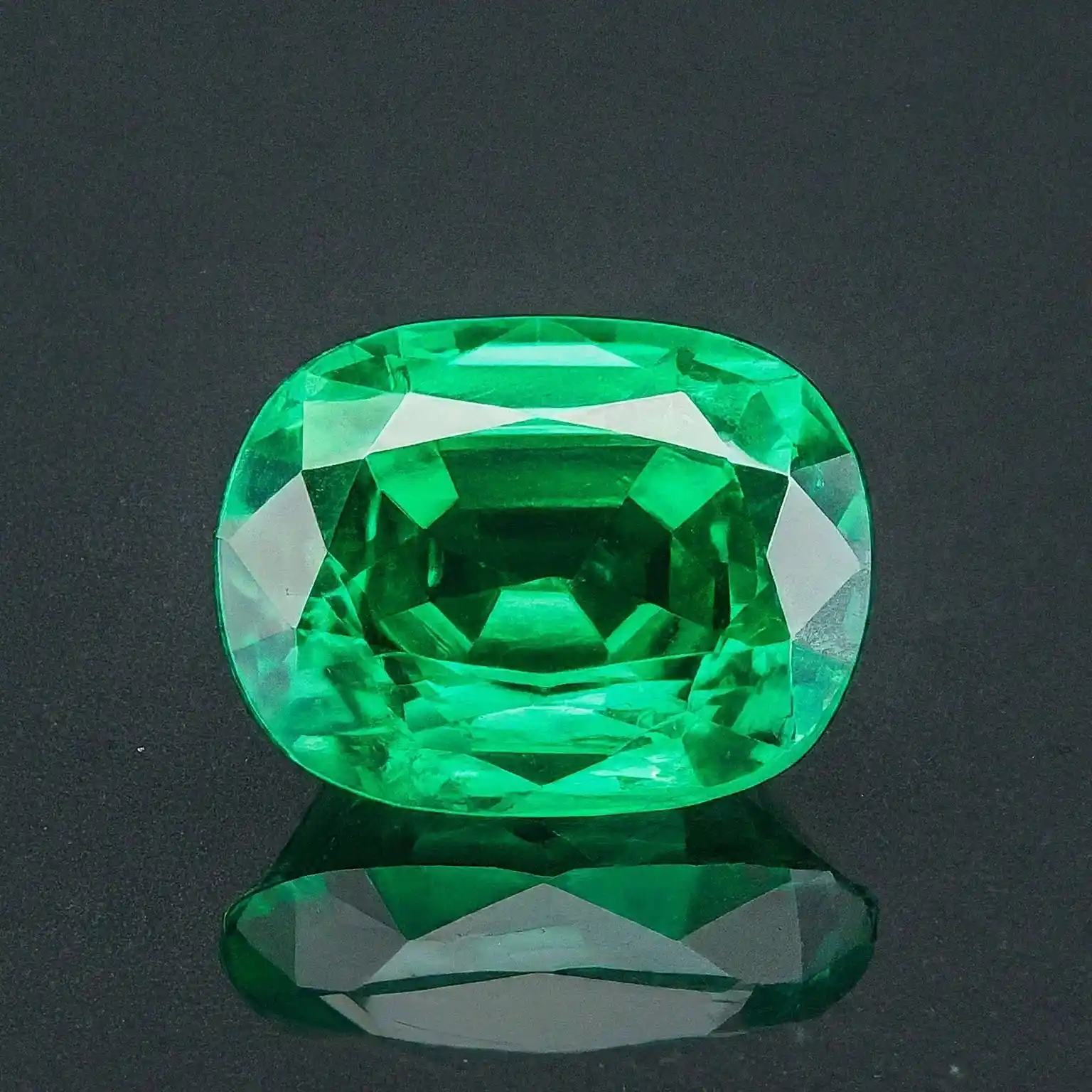
Emerald gemstones are a variety of the mineral beryl, colored green by trace amounts of chromium and sometimes vanadium. Beryl itself is colorless in its pure form. It is the presence of these trace elements that gives emerald its distinctive deep green color.
Sapphire and ruby get more attention in men’s jewelry, but emerald has its own long history as a stone worn by kings, scholars, and warriors. The green color is unlike anything else in the gemstone world.
Where Do Emerald Gemstones Come From
Emerald gemstones are found in several countries, but three origins dominate the market in terms of quality and reputation.
Colombia
Colombian emeralds are considered the finest in the world. The Muzo and Chivor mines in Colombia have been producing exceptional stones for over 500 years. Colombian emeralds are known for their vivid green color with a slight bluish or yellowish secondary tone and their relatively high clarity compared to other origins.
Zambia
Zambian emerald gemstones are the second most respected origin. They tend to be darker and slightly more blue-green than Colombian stones. Zambian emeralds are often larger and have strong color saturation, making them popular for men’s rings where stone size matters.
Brazil
Brazilian emeralds are typically lighter in color with a more yellowish green tone. They are more widely available and more affordable than Colombian or Zambian stones, making them a practical option for everyday jewelry.
Why Are Emerald Gemstones So Desirable
There are three reasons emerald gemstones command the prices they do.
First, the color. No other gemstone produces that specific deep forest green. The color is instantly recognizable and has no real substitute in the natural world.
Second, rarity. High quality emeralds with good color and clarity are genuinely rare. Most natural emeralds have inclusions, which gemologists call a “jardin” or garden. A clean emerald with strong color is exceptionally uncommon.
Third, history. Emerald gemstones appear in the crown jewels of multiple nations, in Mughal artifacts, in ancient Egyptian burial sites, and in the rings of Roman emperors. That kind of historical weight adds to the desirability of the stone in a way that newer or more common gems simply cannot match.
Summary Table
Feature
Detail
Mineral Family
Beryl
Color Agent
Chromium and Vanadium
Hardness
7.5 to 8 on Mohs scale
Top Origins
Colombia, Zambia, Brazil
Typical Inclusions
Yes, called jardin
Best For
Rings, pendants, statement jewelry
Emerald Gemstones in Culture and Tradition
Emerald gemstones have deep roots across multiple cultures. In Islamic tradition, green is the color of paradise and is closely associated with spiritual purity. The Prophet Muhammad is said to have favored green, and emerald has long been considered a stone of blessing in the Islamic world.
In Vedic tradition, emerald is linked to the planet Mercury and is believed to enhance intelligence, communication, and business success. It is one of the nine sacred Navaratna stones worn for astrological benefit.
In Western history, emerald was associated with Venus, the goddess of love, and was worn as a symbol of fertility and rebirth. The Incas and Aztecs considered emerald gemstones sacred and used them in religious ceremonies long before European contact.
How to Tell if an Emerald Gemstone Is Real
Knowing what to look for helps you avoid synthetic or fake stones when buying an emerald ring.
Look for Inclusions
Real emerald gemstones almost always have inclusions visible under magnification. A stone that looks perfectly clean to the naked eye is more likely to be synthetic or glass. Inclusions in natural emeralds are expected and accepted by gemologists worldwide.
Check the Color
Natural emerald has a specific deep green that ranges from bluish green to slightly yellowish green. Stones that are too bright, too uniform, or neon green are likely synthetic or dyed. The color should look rich and deep, not artificial.
Ask for Certification
The most reliable way to verify an emerald is through certification from a recognized gemological laboratory. The Gemological Institute of America provides detailed reports on emerald origin, treatment status, and quality that give you complete confidence in what you are buying.
How Much Do Emerald Gemstones Cost
The price of emerald gemstones varies significantly depending on origin, color, clarity, and carat weight.
A commercial grade emerald can cost anywhere from $50 to $200 per carat. A fine Colombian emerald with strong color and good clarity can reach $5,000 to $10,000 per carat or more. Zambian emeralds typically fall in the mid-range between these two extremes.
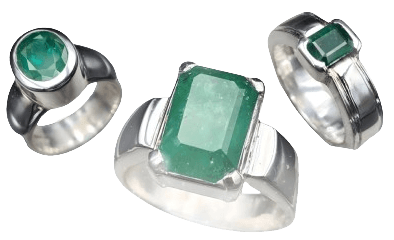
For a men’s emerald ring with a natural stone in 925 sterling silver, expect to pay between $150 and $800 depending on stone size and quality. That range gives you a genuine natural emerald without paying fine jewelry prices.
How to Care for Emerald Gemstones
Emerald gemstones rate 7.5 to 8 on the Mohs hardness scale, which makes them reasonably durable but softer than sapphire or ruby.
Clean your emerald ring with warm water, mild soap, and a soft cloth. Avoid ultrasonic cleaners as the vibrations can damage the stone or loosen the setting. Keep emeralds away from harsh chemicals including household cleaners, chlorine, and acetone.
Store emerald rings separately from harder gemstones like sapphire and diamond to prevent surface scratching.
Where to Buy a Natural Emerald Ring
If you are ready to own a genuine natural emerald, explore our full collection of emerald rings for men at RingsWear.
Every stone we sell is completely natural, not synthetic, not dyed, and not treated in any form. Certification is available on demand for every ring in our collection.
We also carry sapphire rings and turquoise rings across a wide range of styles and settings. All orders ship free via FedEx from Northvale, New Jersey to the United States and United Kingdom.
FAQ
Are emerald gemstones natural or usually synthetic?
Both natural and synthetic emeralds exist on the market. Natural emeralds are formed over millions of years in the earth and contain characteristic inclusions. Synthetic emeralds are grown in a lab and are chemically identical but lack rarity and value. Always ask for certification to confirm you are buying a natural stone.
What is the best origin for emerald gemstones?
Colombia is widely considered the best origin for emerald gemstones. Colombian stones from the Muzo and Chivor mines are known for their vivid green color and relatively high clarity. Zambian emeralds are a strong second choice, particularly for men’s rings where deeper color and larger stone sizes are preferred.
Is an emerald ring suitable for everyday wear?
Yes, with reasonable care. Emerald gemstones rate 7.5 to 8 on the Mohs hardness scale, which is durable enough for daily wear in a well-made setting. Avoid exposing the ring to hard impacts, harsh chemicals, or ultrasonic cleaning. A solid sterling silver setting with a secure bezel or prong will protect the stone well over time.