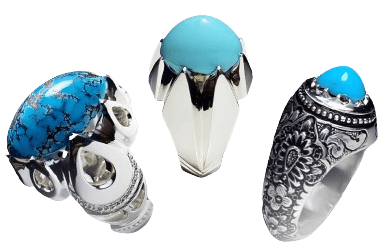
What Is the Importance of a Feroza Ring?
The Real Importance of a Feroza Ring
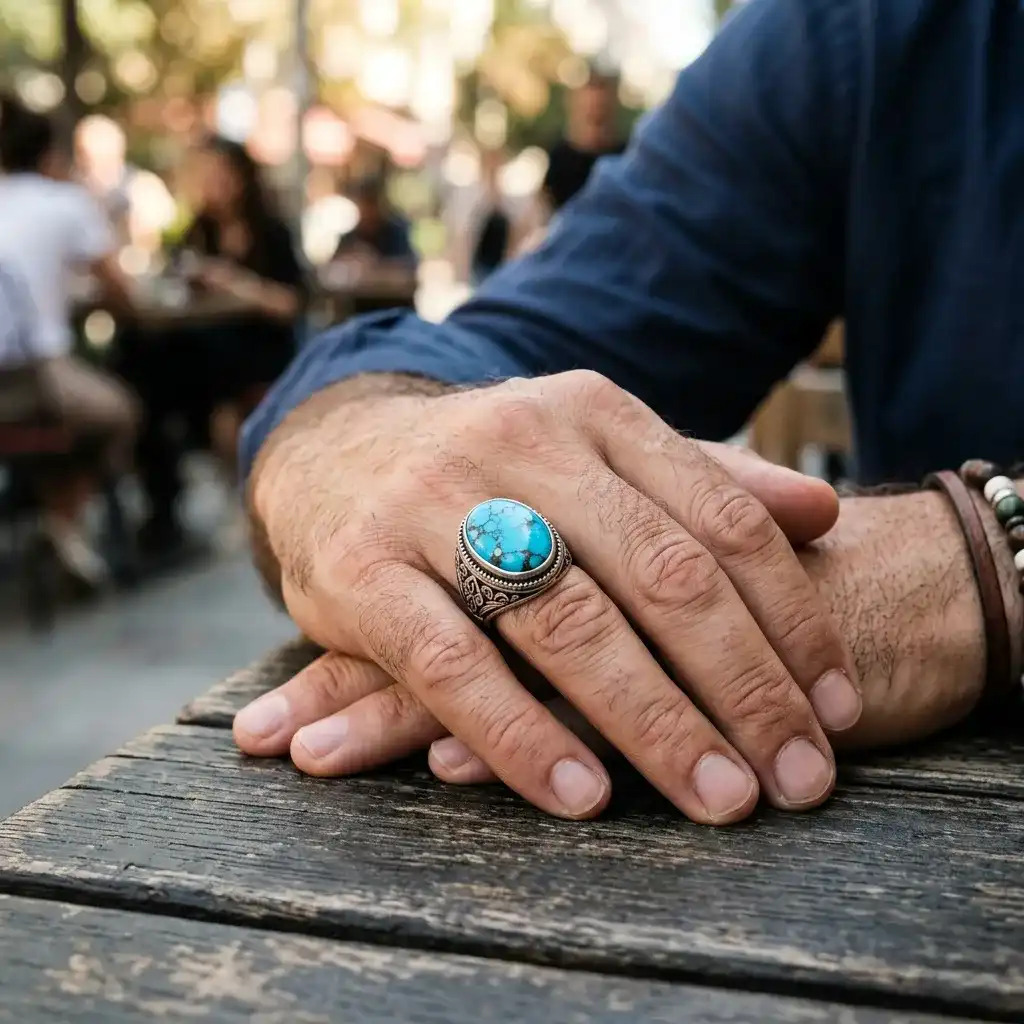
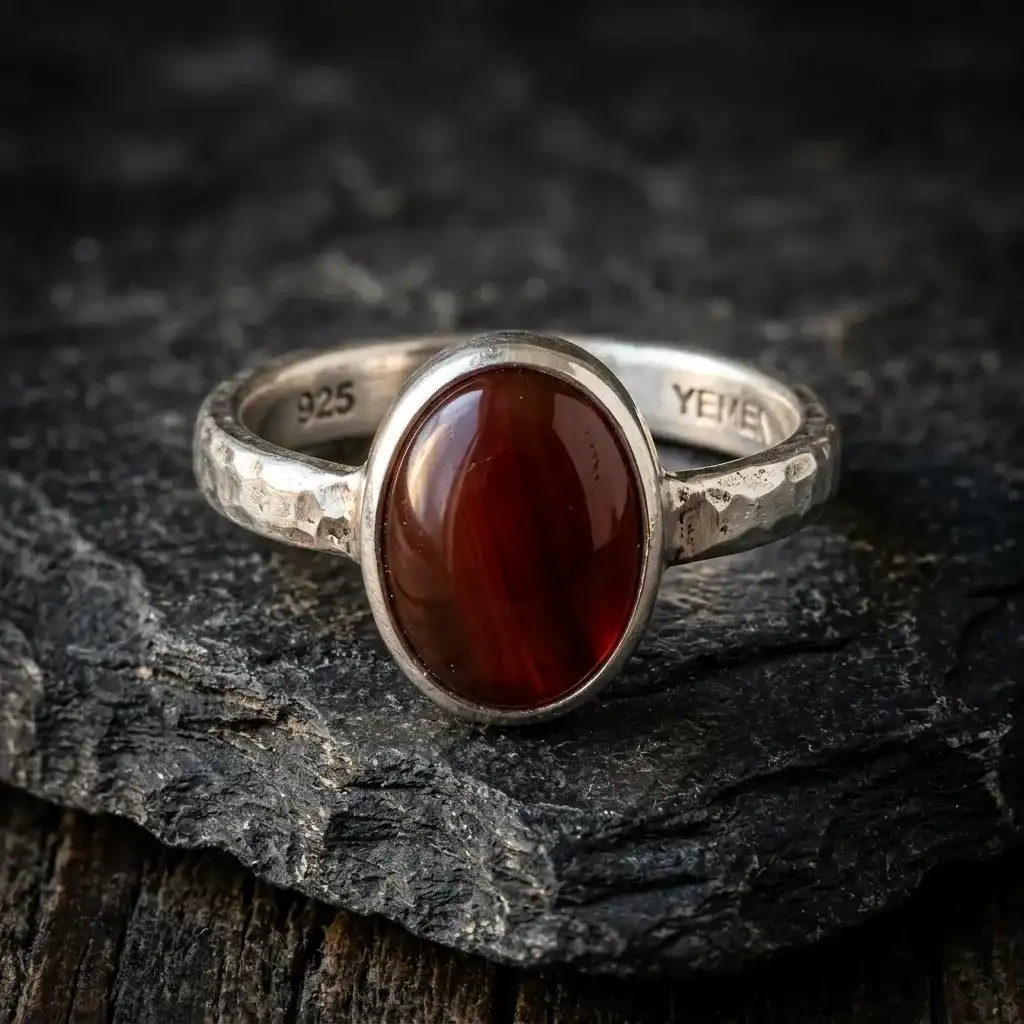
The importance of a feroza ring goes back thousands of years, long before it became a fashion staple. Persian royalty wore feroza, known in English as turquoise, to ward off harm. Native American tribes considered it sacred enough to bury with their dead, and travelers across the Middle East carried it as a kind of portable luck.
Today, people understand the importance of a feroza ring in much the same way their ancestors did, just with less ceremony. It still reads as a stone of calm, honesty, and protection, which is part of why it shows up so often in rings meant to be worn daily rather than saved for special occasions.
What Feroza Is Believed to Protect Against
Across Persian, Native American, and Islamic traditions, feroza is most commonly associated with protection from negative energy, the evil eye, and general misfortune. Some traditions go further and credit it with guarding the wearer’s health and safety during travel.
There is also a well known piece of folklore around how the stone behaves. Many cultures believe feroza will visibly fade or dull if the wearer’s intentions turn sour, or if it absorbs negativity on their behalf. This is part of why feroza has historically been given as a gift rather than bought for oneself, since a gifted stone is thought to carry the giver’s good will into it. That is another importance of a Feroza ring
Which Zodiac Sign Suits Feroza
Feroza is most often linked to Sagittarius in Western astrology, and it also appears as a traditional December birthstone alongside zircon and tanzanite. In some Native American astrological traditions, it is connected to Scorpio instead. Either way, it is considered a fairly universal stone, worn comfortably outside of strict zodiac rules by people of any sign.
What the Bible Says About Turquoise
This one depends on which translation you are reading. In several English versions, turquoise appears among the twelve gemstones set into the High Priest’s breastplate in the Book of Exodus, each stone representing one of the twelve tribes of Israel. Older translations such as the King James Version render the same Hebrew word differently, often as emerald, which is why the exact identity of the stone is still debated among scholars rather than settled fact.
What is consistent across translations is the idea that this stone, whichever modern name it carries, held a place of honor in sacred dress, which is part of why feroza still feels significant rather than purely decorative today.
When to Wear It and Which Finger
There is no fixed occasion that calls for feroza specifically. Most people wear it daily, the same way they would any ring meant for protection rather than formality, though some traditions favor wearing it during travel for the safety it is believed to offer.
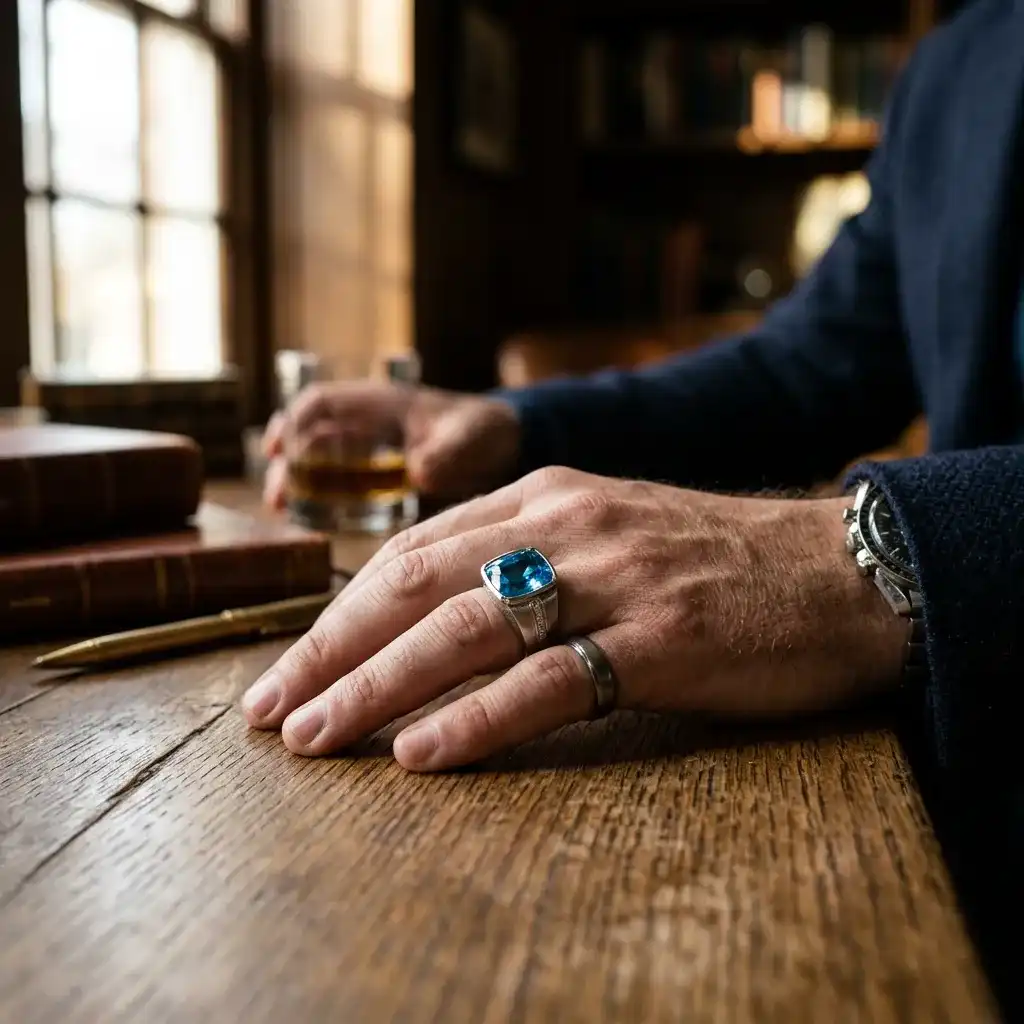
The index finger is the most commonly recommended placement in traditions that follow Islamic and Persian customs, since this is also where many cultures place rings meant to carry spiritual significance. That said, the right hand ring finger and the pinky are also common choices, and comfort tends to matter more than strict rule here.
Who Should Avoid Wearing Feroza
There is no strict prohibition against anyone wearing feroza. The closest thing to a rule in most traditions is the gifting custom mentioned earlier, the belief that a feroza stone works best when it is given rather than purchased for yourself.
From a practical standpoint, anyone with a known sensitivity to copper based minerals should be aware that feroza contains trace copper, though reactions are uncommon since the stone itself sits in a silver setting rather than touching skin directly in most ring designs.
How to Tell Real Feroza From Fake
Genuine feroza has a few physical traits that are difficult to fake convincingly, even though plenty of substitutes try. The table below covers the most reliable ways to tell the difference.
| Trait |
Real Feroza |
Fake or Imitation |
| Weight |
Noticeably heavier for its size |
Feels light, often plastic or resin |
| Touch |
Cool to the touch, slow to warm |
Warms quickly in your hand |
| Color and pattern |
Natural matrix veining, slight color variation |
Uniform color, no real matrix |
| Common substitute |
N/A |
Dyed howlite or magnesite |
| Fading over time |
Minimal with proper care |
Dye often fades or transfers onto skin |
| Pure, untreated color |
Soft sky blue to blue green, slightly muted |
Often unnaturally bright or saturated |
On rarity and price, the most prized natural color is a deep, even sky blue with minimal matrix, often called robin’s egg blue, which can sell for considerably more per carat than heavily veined or greenish stones. Genuine, untreated feroza from respected sources can range from modest prices for smaller stones to several hundred dollars per carat for fine, gem grade material.
Why Feroza Should Stay Dry
Feroza is a porous stone, which means it can absorb oils, lotions, and water more easily than harder gemstones like sapphire or ruby. Repeated exposure to water or chemicals can dull its color over time and weaken the stone’s surface, which is why most jewelers recommend removing feroza rings before swimming, washing dishes, or applying lotion.
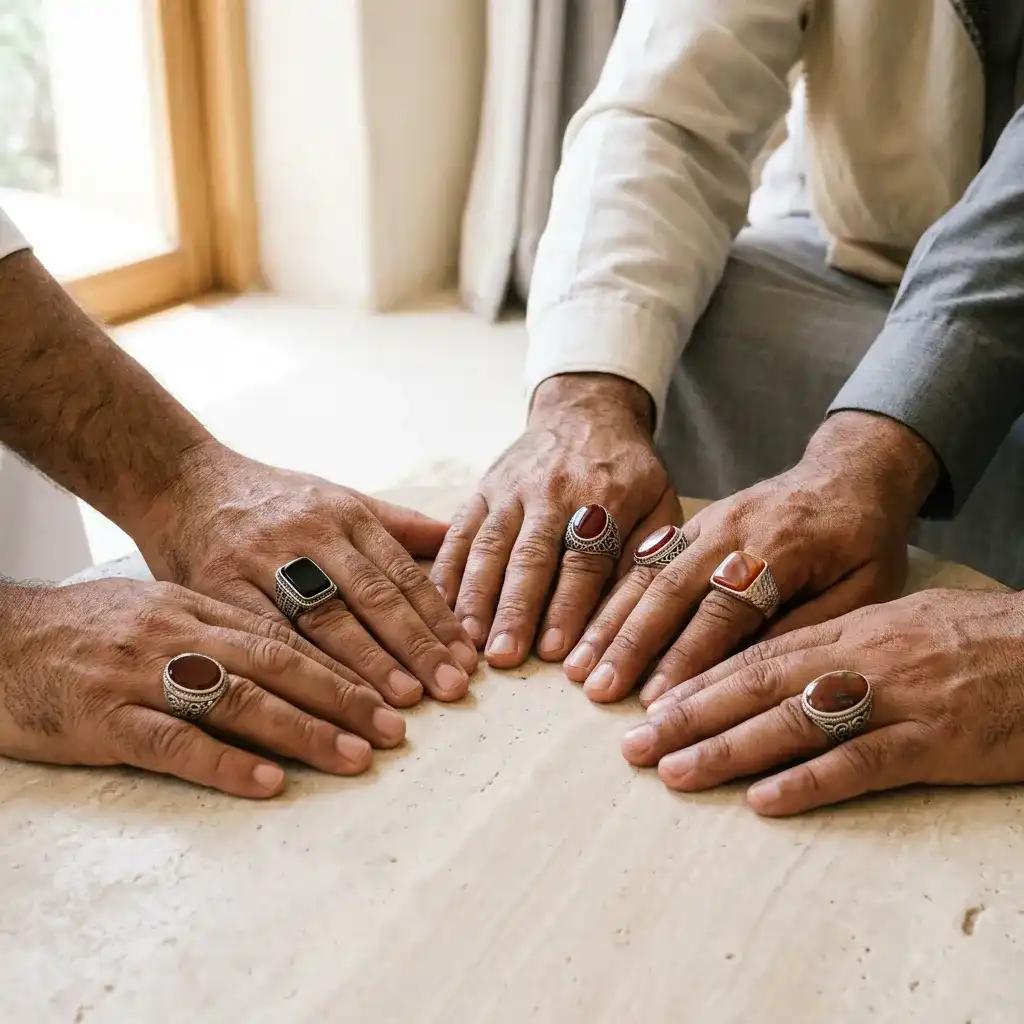
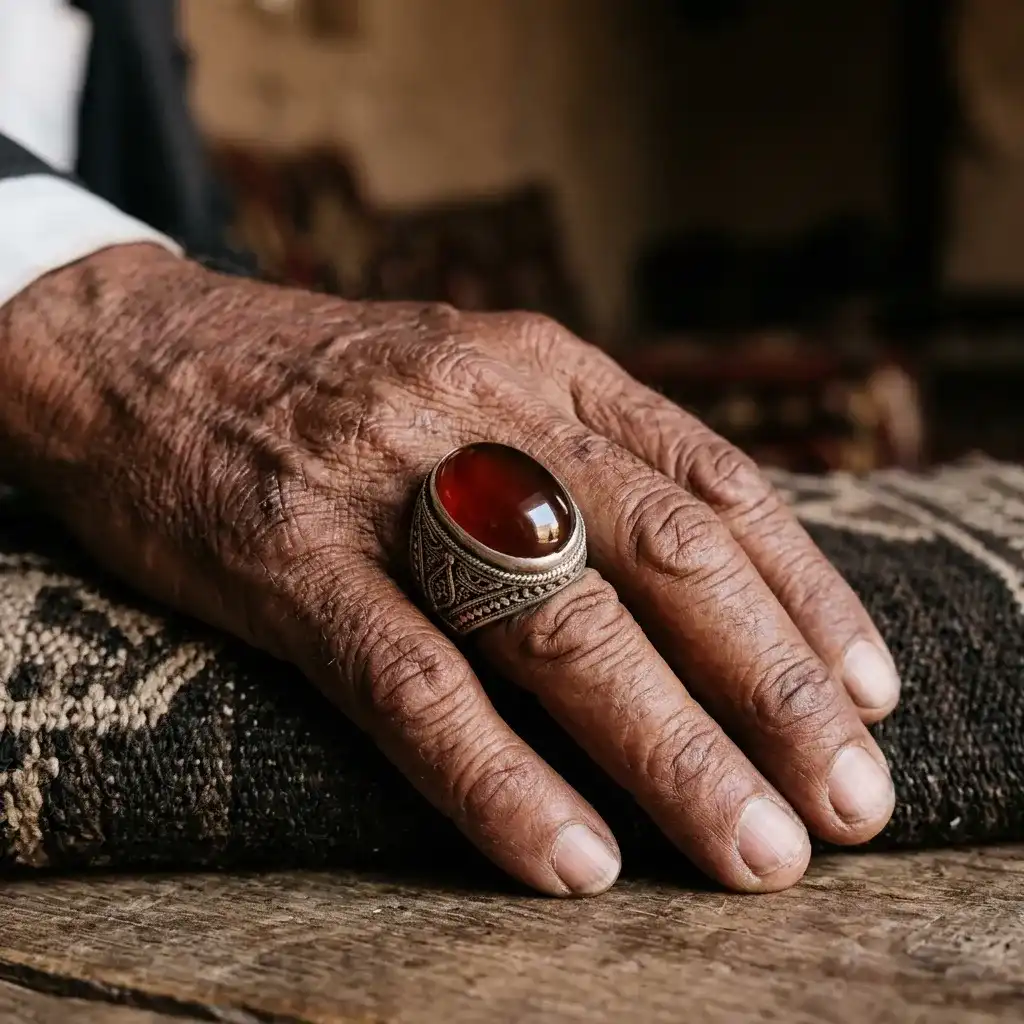
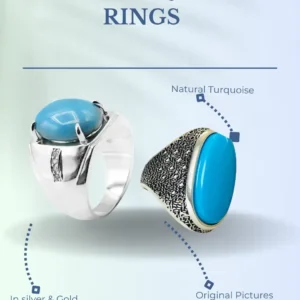
Understanding the importance of a feroza ring is one thing, but every feroza ring we carry at RingsWear is completely natural. Not synthetic, not dyed, and not treated in any form. If you are drawn to stones with similar cultural and spiritual weight, our aqeeq rings and Dur-e-Najaf rings carry the same kind of meaning. You can browse our full natural feroza ring collection to find one that fits, and you can learn more about how gemstones are graded for authenticity at GIA.edu.