Table of Contents
Ruby vs emerald is one of the oldest debates in the gemstone world. Both stones have sat on the crowns of kings, been referenced in ancient scripture, and commanded prices per carat that exceed diamonds. Yet most buyers have no idea which one is actually more valuable, more durable, or more meaningful. This guide gives you a straight answer.
For centuries, gemologists recognized only three stones as truly precious: ruby, emerald, and sapphire. Everything else, no matter how beautiful, was classified as semi-precious. This distinction matters because it reflects genuine rarity, not just marketing. All three belong to different mineral families but share the same rare combination of color, hardness, and limited natural supply that separates them from the rest of the gemstone world.
Ruby sits at Mohs 9, making it the second hardest natural gemstone after diamond. It belongs to the corundum family and resists scratching exceptionally well under daily wear. Emerald measures Mohs 7.5 to 8 and belongs to the beryl family. That half-point difference sounds small but matters significantly in practice. Emeralds are also naturally included, meaning they contain internal fractures called jardin that make them more vulnerable to impact and chipping than rubies. A ruby handles daily wear more reliably than an emerald of equivalent quality.
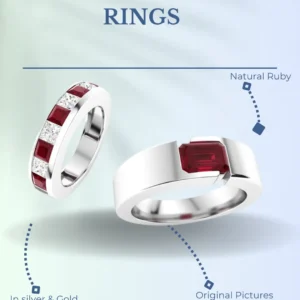
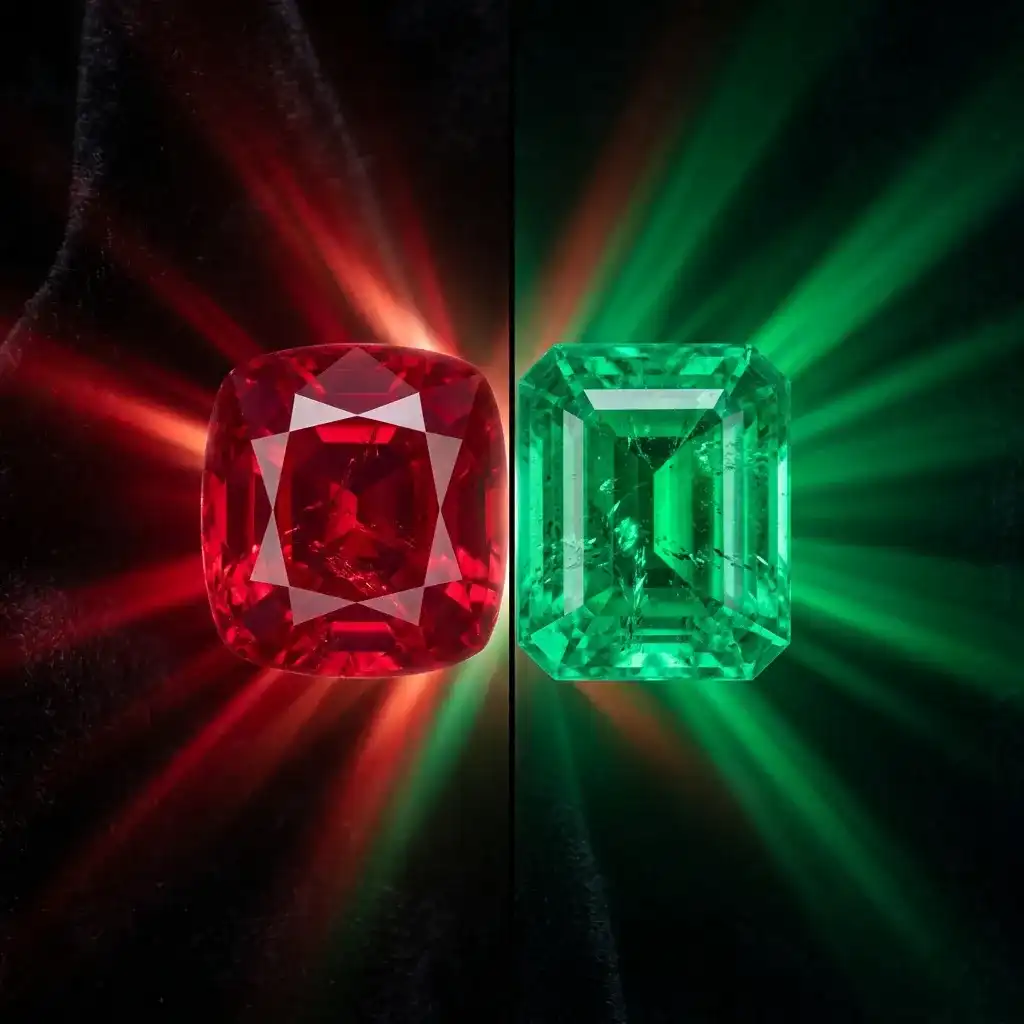
Color is everything with both stones. The most valuable ruby displays what gemologists call pigeon blood red, a pure, vivid red with a slight blue undertone found almost exclusively in Burmese stones. According to GIA, this specific hue commands a significant premium over rubies from African or Thai origins even at identical carat weights.
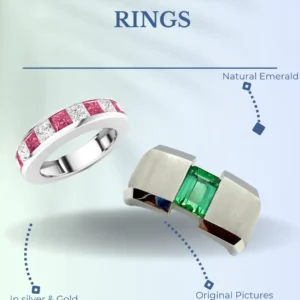
The finest emeralds come from Colombia and display a deep, saturated green with a slight blue or yellow secondary tone. Colombian emeralds are almost universally regarded as the world standard. Inclusions in emerald are so common and accepted that the industry uses the French term jardin, meaning garden, to describe them. A completely clean emerald is actually suspicious, not desirable, because it suggests laboratory origin.
At the top end, fine Burmese ruby costs more per carat than any other colored gemstone, regularly exceeding diamond prices at major auctions. A 1 carat ruby of commercial quality in sterling silver typically starts around $200 to $500. A fine unheated Burmese ruby of 1 carat can reach $10,000 to $30,000 or more depending on certification.
A 1 carat emerald of commercial quality starts around $100 to $400. Fine Colombian emerald of 1 carat reaches $3,000 to $10,000. At every quality tier, top ruby commands a higher price than top emerald. The gap widens significantly at the investment grade level.
Fine ruby is rarer than fine emerald. Gem quality rubies with strong color and acceptable clarity are found in very limited deposits, primarily in Myanmar, Mozambique, and a few locations in East Africa. Emeralds are found across a broader geography including Colombia, Zambia, Brazil, and Afghanistan, which provides a wider supply base. Neither stone is common, but at the highest quality levels, ruby is genuinely harder to find.
In Vedic astrology, ruby represents the Sun and is traditionally avoided by people with a weak or malefic Sun in their birth chart, particularly those born under Taurus, Virgo, Capricorn, Aquarius, and Libra ascendants. Emerald represents Mercury and is generally avoided by those born under Sagittarius and Pisces ascendants. These are not universal rules, and many buyers wear both stones purely for their beauty with no astrological consideration at all. Within an Islamic framework, there is no prohibition on wearing ruby or emerald, and both stones have a long history in Islamic jewelry tradition.
Both ruby and emerald appear in religious texts across multiple traditions. In the Bible, ruby is mentioned in Proverbs 31:10, where a virtuous woman is described as more valuable than rubies, placing the stone at the highest tier of worth in ancient Jewish culture. Emerald appears in Revelation 4:3 as part of the rainbow surrounding God’s throne. In Islamic tradition, gemstones including red stones associated with aqeeq carry a Sunnah recommendation, though ruby itself is not specifically named. Both stones have carried spiritual significance across cultures for over three thousand years.
| Factor | Ruby | Emerald |
|---|---|---|
| Mineral Family | Corundum | Beryl |
| Mohs Hardness | 9 | 7.5 to 8 |
| Color | Red (pigeon blood = finest) | Green (Colombian = finest) |
| Best Origin | Burma (Myanmar) | Colombia |
| 1 Carat (commercial) | $200 to $500+ | $100 to $400+ |
| 1 Carat (fine) | $10,000 to $30,000+ | $3,000 to $10,000+ |
| Inclusions | Some acceptable | Expected (jardin) |
| Daily Wear Durability | Excellent | Good with care |
| King of Gems? | Yes, historically | Cleopatra’s stone |
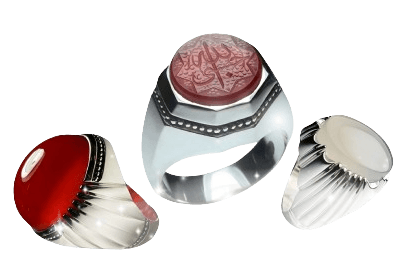
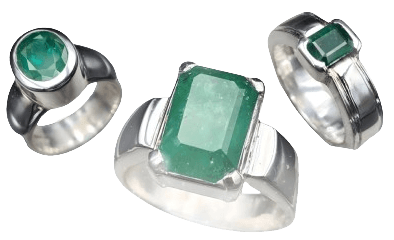
If you want to see both stones set in solid 925 sterling silver, browse the ruby ring collection and the emerald ring collection at RingsWear. Every stone is natural, earth-mined, and available with certification on demand.
Ruby scores higher on hardness (Mohs 9 vs 7.5 to 8), commands a higher price at equivalent quality, and is considered rarer at the fine grade. Emerald is not inferior, but ruby wins on durability and investment value in a direct comparison.
Fine ruby is more expensive than fine emerald at every quality tier. At the commercial grade the difference is small, but at auction-grade quality, Burmese ruby regularly sells for more per carat than any other colored gemstone including emerald, sapphire, and diamond.
Ruby has historically held that title. In Hindu tradition it is called Ratnaraj, literally the king of gemstones. Its combination of color, hardness, rarity, and cultural weight across multiple civilizations places it above all other colored stones in traditional gemological hierarchy.
Ruby, emerald, and sapphire. These three are the only gemstones traditionally classified as precious, a distinction based on their rarity, hardness, and sustained global demand across centuries.
A 1 carat commercial-grade ruby in silver jewelry typically costs $200 to $500. A fine, unheated, certified Burmese ruby of 1 carat can reach $10,000 to $30,000 or more depending on color saturation and origin certification.
A 1 carat commercial-grade emerald starts around $100 to $400. Fine Colombian emerald with strong color and minimal inclusions at 1 carat reaches $3,000 to $10,000. Completely eye-clean emeralds at high carat weights are exceptionally rare and priced accordingly.
In Vedic astrology, ruby is traditionally avoided by those with a weak or harmful Sun placement, particularly Taurus, Virgo, Capricorn, Aquarius, and Libra ascendants. In Islamic tradition there is no such restriction and no stone is forbidden to wear.
Vedic astrology suggests Sagittarius and Pisces ascendants avoid emerald as it represents Mercury, which is considered incompatible with their ruling planet Jupiter. No such restriction exists in Islamic or mainstream Western tradition.
Yes. A trained gemologist uses magnification to look for natural inclusions, a refractometer to measure light bending, and spectroscopy to detect treatments. Synthetic rubies lack the specific inclusion patterns of natural stones and can be identified under professional examination.
Yes. Lab-grown emeralds have different inclusion patterns and growth structures than natural stones. Under magnification, natural emeralds show the characteristic jardin, a network of natural fractures and inclusions, while lab stones appear too clean or show chevron growth patterns that give them away.
In the Bible, Proverbs 31:10 asks “Who can find a virtuous woman? For her price is far above rubies,” placing ruby at the highest tier of earthly value in the ancient Hebrew world. Ruby also appears in descriptions of the breastplate of the High Priest in Exodus.
Emerald appears in Revelation 4:3, where a rainbow resembling an emerald surrounds the throne of God. It is also listed among the twelve foundation stones of the New Jerusalem in Revelation 21. In multiple ancient traditions the green of emerald was associated with divine renewal and life.
Can men wear ruby ring styles the way women do? Yes, and they have for...
Choosing the right yellow sapphire ring finger is the first question most people ask once...

Knowing how to clean amethyst ring at home keeps the purple bright and the silver...

The Yemeni aqeeq gemstone in Islam holds a place few other stones can claim. Worn...

The difference between synthetic vs natural sapphire is the single most important thing to understand...

Yellow sapphire rings for men are among the most meaningful pieces a man can own....
Real gemstone rings in 925 silver are one of the smartest purchases a man can...
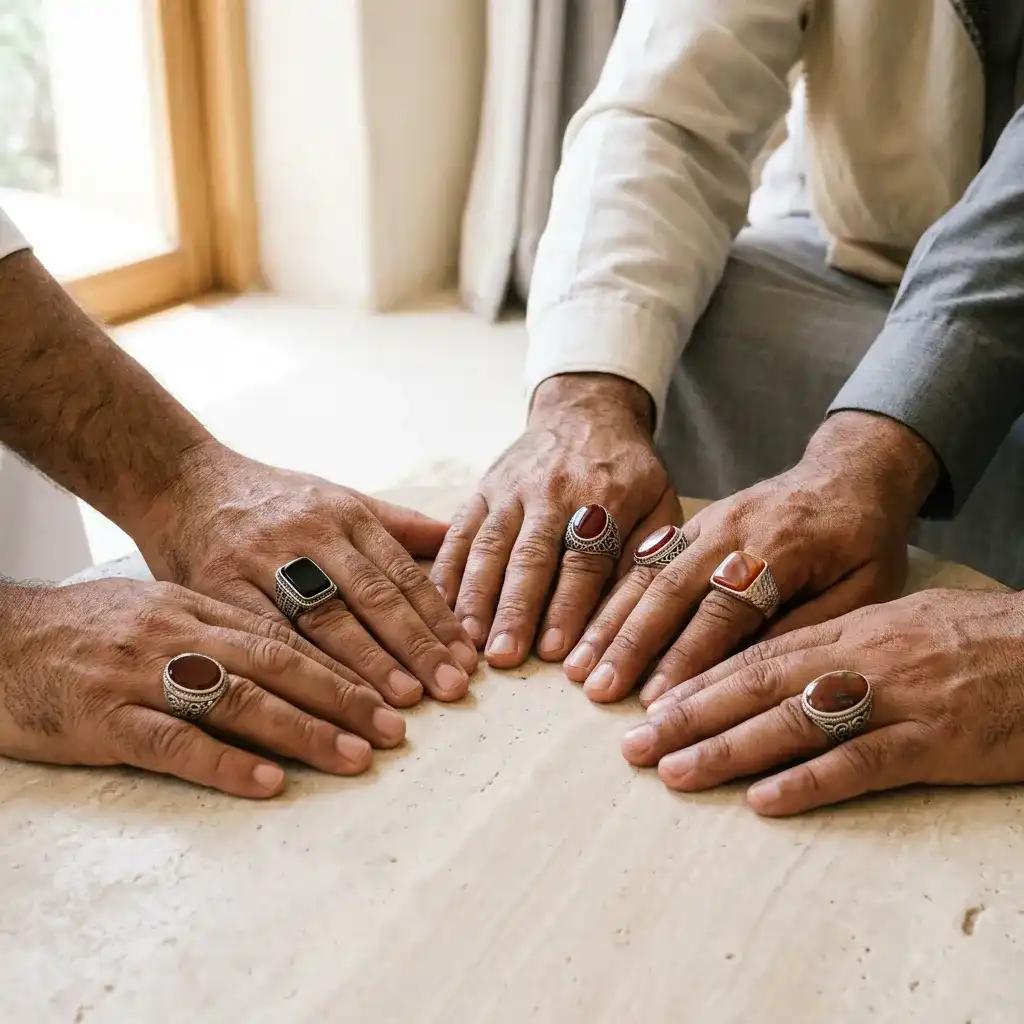
Why do shias wear aqeeq rings? Walk into any gathering in Iran, Iraq, Pakistan or...
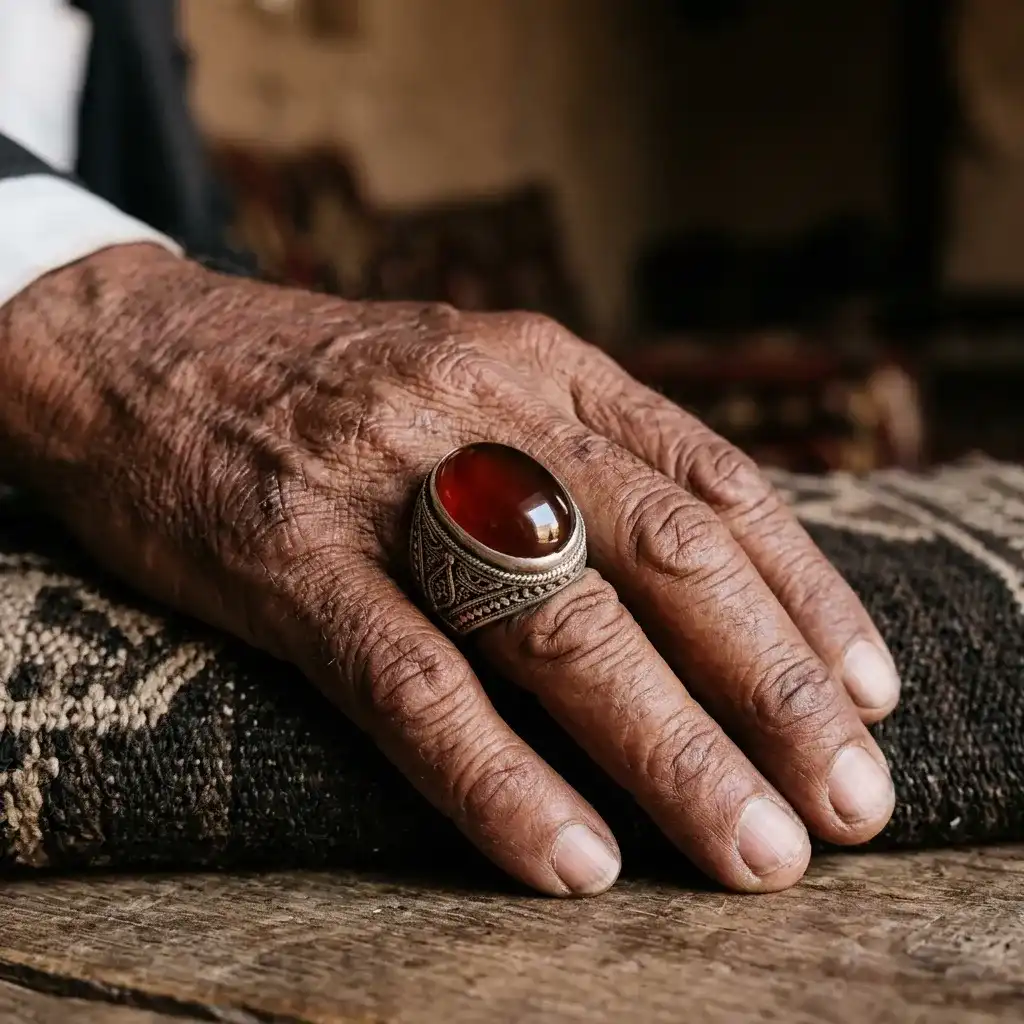
The question of whether wearing an aqeeq ring sunnah is a real practice comes up...