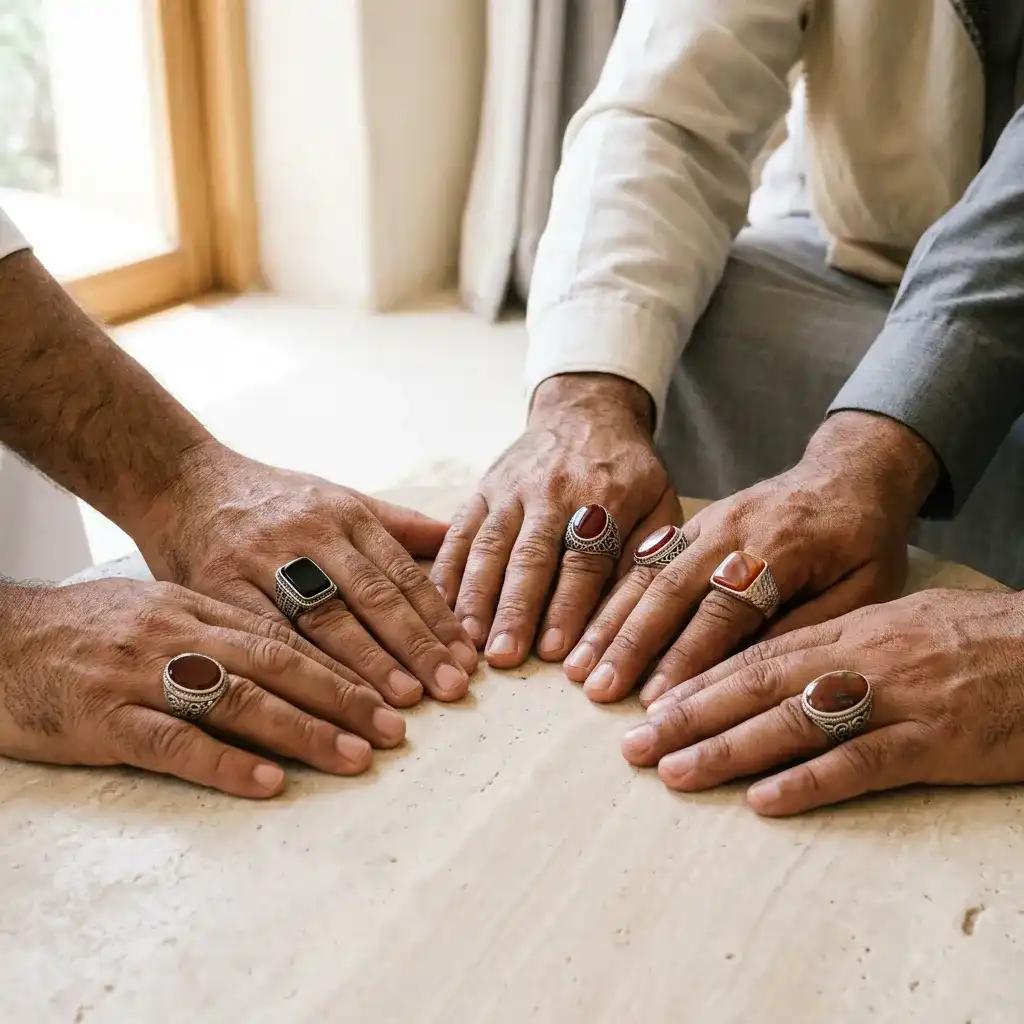
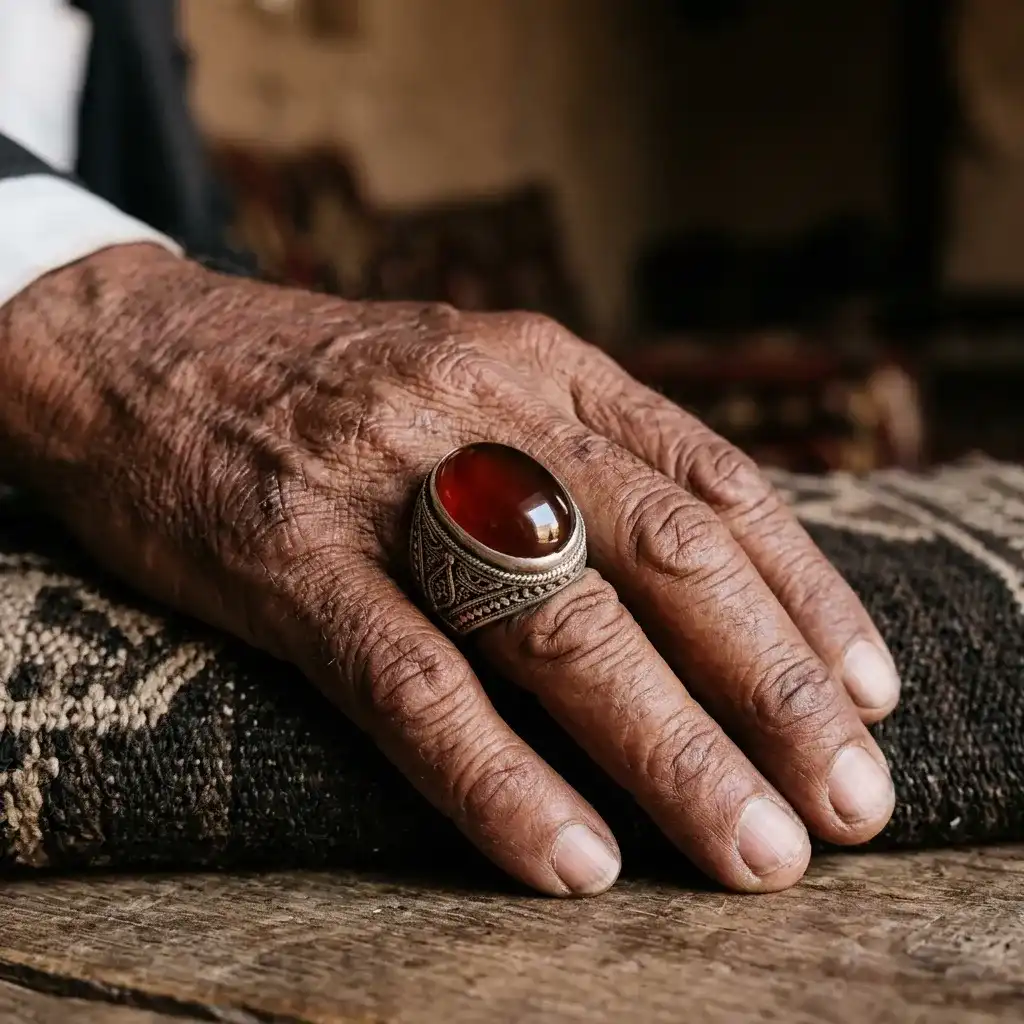
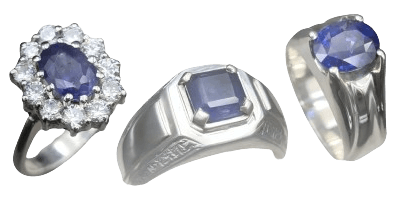
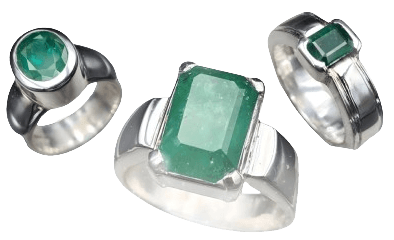
Knowing a real Yemeni aqeeq stone from a fake one is the difference between owning something that lasts a lifetime and paying good money for dyed glass. The market is full of treated stones sold as genuine, and most buyers have no idea what to look for. Here are the checks that actually work, and what an honest seller should be willing to tell you.
What makes Yemeni aqeeq different
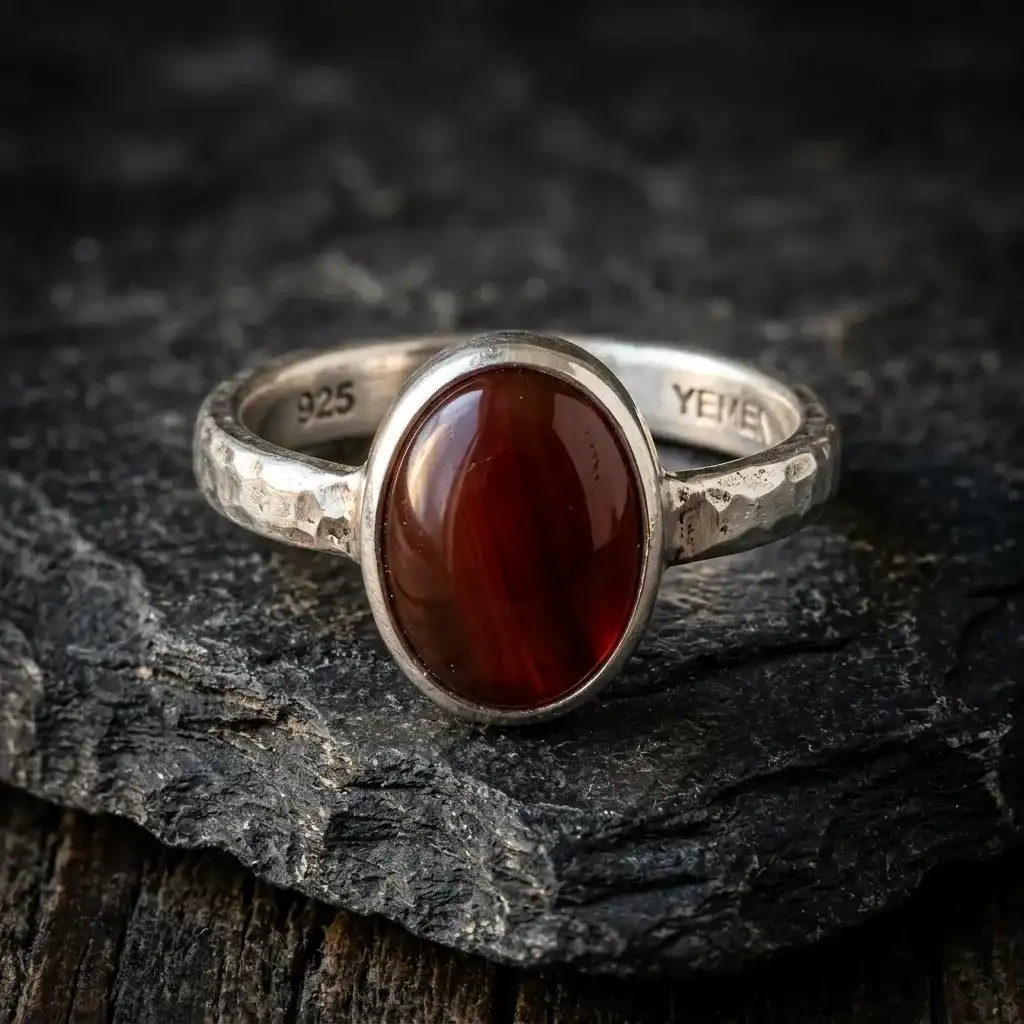
Aqeeq is the traditional name for agate, a form of chalcedony. What sets a real Yemeni aqeeq stone apart is the density and depth of its color, the fine grain, and the way it takes a high polish without looking glassy. Stones from this region have been prized for centuries, which is exactly why so many imitations exist.
The reputation is the problem. Because buyers will pay more for Yemeni origin, sellers have every incentive to call any red agate Yemeni. Origin claims are almost impossible to verify from a photo, so what you can actually judge is whether the stone is natural at all.
Seven ways to test a stone yourself
None of these is proof on its own. Taken together they tell you a lot.
Look for natural marks first. A real Yemeni aqeeq stone almost always shows tiny inclusions, faint banding, or slight variation in tone when you hold it to the light. Perfectly uniform color with zero character is the first warning sign, not a mark of quality.
Check the temperature. Natural stone stays cool against your skin for a moment when you pick it up. Plastic and resin warm to your body heat almost immediately.
Feel the weight. Agate is denser than it looks. A stone that feels light for its size is usually not stone at all.
Turn it under light. Genuine agate holds its color and shows subtle shifts in translucency at the edges. Dyed stones often look flat and equally bright from every angle.
Look at the edges and the drill holes if any are visible. Dye tends to pool and darken where the stone was cut, which is the clearest tell of a treated stone.
Test the hardness carefully. Agate sits around 7 on the Mohs scale, so it will not scratch easily against steel. Glass and plastic mark far more readily.
Finally, look for bubbles. Glass imitations frequently contain tiny round air bubbles inside. Natural agate never does.
How fakes are usually made
Most fakes are not attempts to build a stone from scratch. They are real but cheap agate that has been dyed to imitate the deep colors of a real Yemeni aqeeq stone. This matters, because a dyed stone can pass a hardness test and still be worthless as an authentic piece.
The other common route is glass, which is easy to spot once you know to look for bubbles and warmth. Resin and plastic fakes are cruder still and rarely fool anyone holding the piece. The dyed agate is the one that catches people out.
Real aqeeq compared to common fakes
| Feature |
Natural aqeeq |
Dyed agate |
Glass |
| Color |
Deep, slightly varied |
Uniform, often too bright |
Flat and even |
| Inclusions |
Present |
Present but masked |
Air bubbles instead |
| Feel |
Cool and heavy |
Cool and heavy |
Warms quickly |
| Dye at edges |
None |
Often visible |
Not applicable |
Notice the middle column. A dyed agate passes the weight and temperature tests, which is why those checks alone are not enough. The dye at the edges is what gives it away.
The one question to ask any seller
Ask them plainly whether the stone is treated in any way. A seller with a real Yemeni aqeeq stone will tell you it is completely natural. Not synthetic, not dyed, and not treated in any form. A seller who deflects, changes the subject, or answers only about the silver is telling you something without saying it.
Certification helps too. If a seller can provide lab certification on request, that is a strong signal they have nothing to hide. You can read more about how agate and chalcedony are identified on the GIA guide to chalcedony.
Buying with confidence
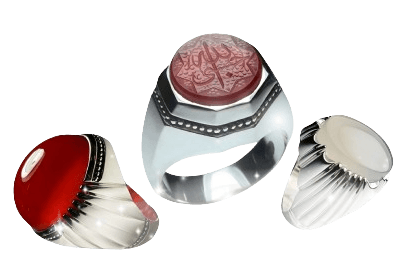
The honest truth is that no photograph proves a stone is genuine. What protects you is buying from someone who states clearly that the stone is natural and untreated, and who will back that up. Every stone in our Yemeni aqeeq rings collection is completely natural, never dyed and never treated.
If you want a piece with a guarantee attached, our guaranteed natural aqeeq ring for men is set in 925 sterling silver and comes with certification on request. For a classic finished piece, the authentic mens aqeeq ring is a genuine Yemeni stone in solid silver.
Learn the tests, ask the question, and buy from someone who answers it straight. That is all it takes to end up with a real Yemeni aqeeq stone rather than a dyed one.
Frequently Asked Questions
Aqeeq rings are rings set with natural agate, a form of chalcedony. Aqeeq is simply the traditional name for agate. Yemeni aqeeq is the most sought after variety because of its density and depth of color.
How can you tell if aqeeq is real?
A real stone shows tiny natural inclusions or faint banding, stays cool to the touch for a moment, feels heavy for its size, and holds its color as you turn it in the light. Perfectly uniform color, air bubbles inside, or dye pooling at the cut edges all point to a fake.
What is the difference between aqeeq and agate?
There is no difference. Aqeeq is the traditional name and agate is the gemological one. They refer to the same natural stone.
Is dyed agate still real stone?
The agate itself is real, but the color is not. A dyed stone will pass a weight or hardness test yet carries none of the value or meaning of a genuine untreated stone, which is why the dye at the edges is the check that matters most.
Buy from a seller who states plainly that the stone is completely natural, never dyed and never treated, and who can provide certification on request. A seller who avoids that question directly is telling you something.
How much should a real aqeeq ring cost?
Price varies with the size, color and quality of the stone and the weight of the silver. Be cautious of anything priced far below the market, since that is usually the clearest sign the stone has been treated.