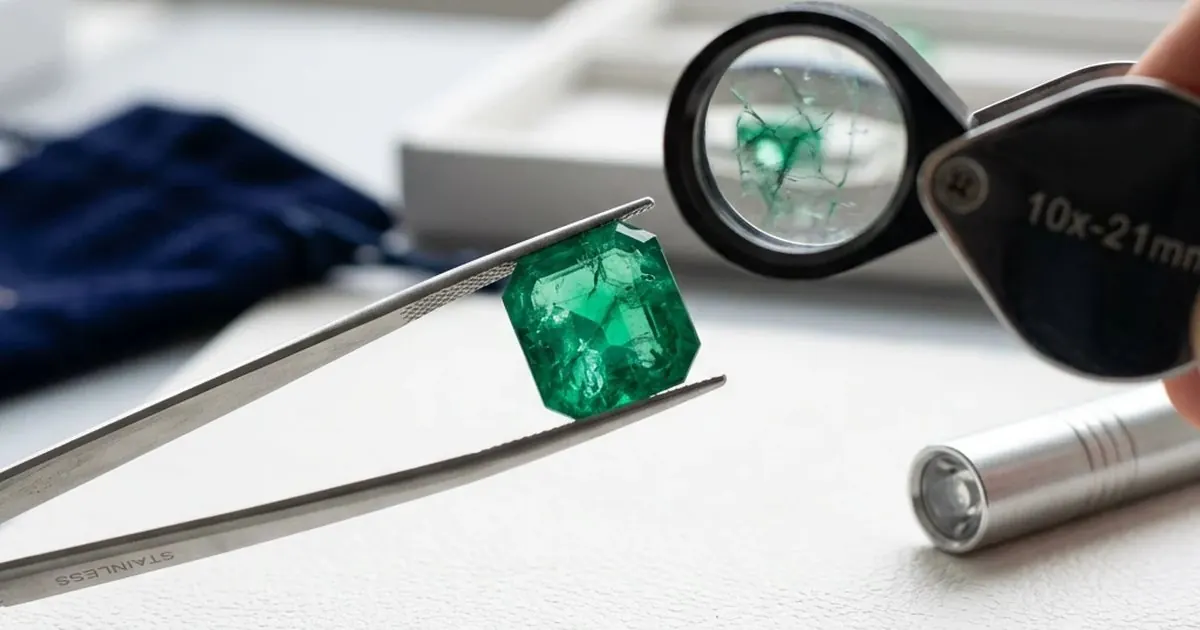
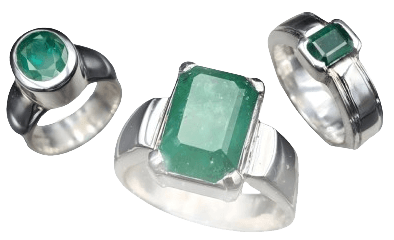
There are different types of emeralds, and the word type can mean three things: where the stone was mined, how it was cut, or a rare natural pattern like trapiche. Each changes the look and price. This guide sorts the main types of emeralds so you can understand what you are buying and why two green stones can feel so different.
Different Types of Emeralds by Origin
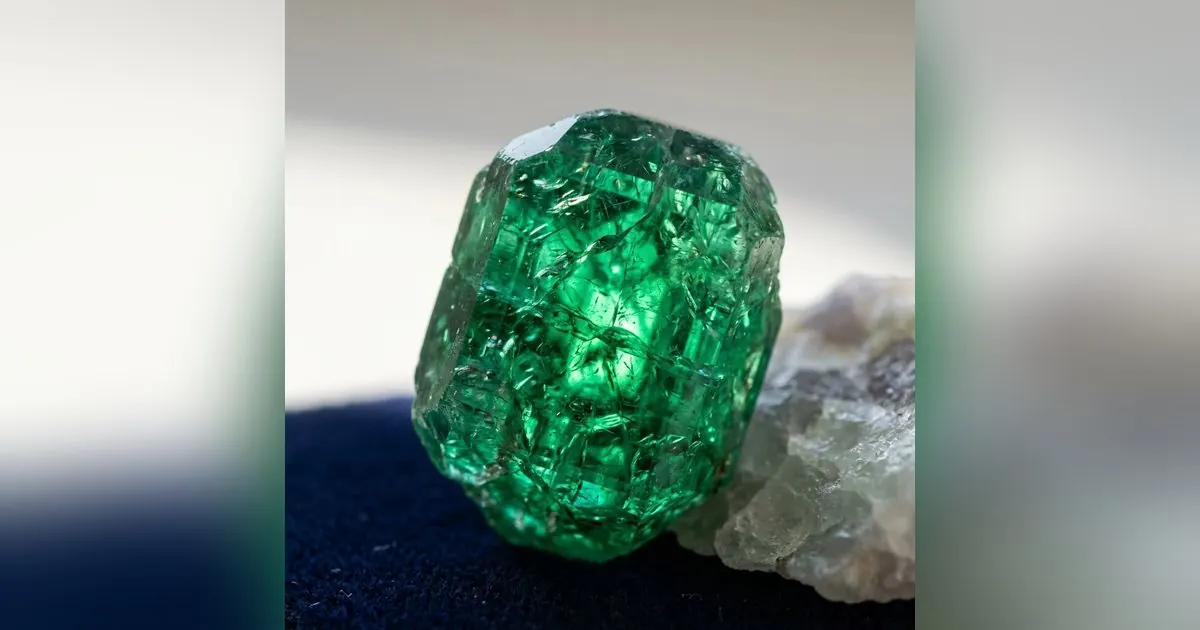
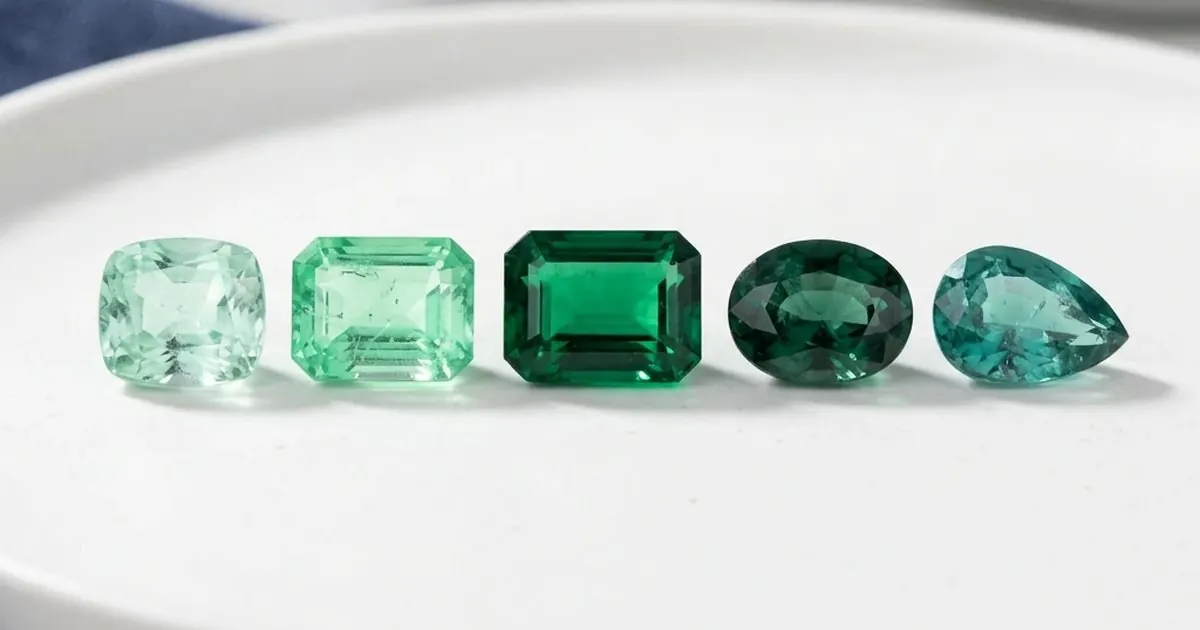
Origin is the most common way dealers group emeralds. Colombian emerald is famous for a warm, vivid green, often with a soft glow. Mines such as Muzo, Chivor and Coscuez have produced some of the most famous stones in history, and a Muzo emerald is a name collectors know well.
Zambian emerald is the second big source. What is a Zambian emerald? It is a stone from the Kafubu area, usually with a cooler, slightly bluish green and often good clarity. Brazilian emerald tends to be lighter and is generally more affordable, while Afghanistan, Ethiopia and Pakistan also produce fine material.
Each source leaves a fingerprint in the stone. Labs study inclusions and trace elements to suggest an origin, and that report can add value at the top end. For everyday rings, though, a Brazilian emerald or Zambian stone with strong colour often looks just as beautiful as a far pricier Colombian one, which is good news for anyone shopping on a budget.
Colombian vs Zambian Emerald
The Colombian vs Zambian emerald comparison comes up more than any other. Neither is simply better. They have different personalities, and the best of both are outstanding.
| Feature |
Colombian vs Zambian |
| Colour |
Colombian warm vivid green, Zambian cooler bluish green |
| Clarity |
Zambian often a little cleaner |
| Price |
Colombian usually higher at the top end |
| Glow |
Colombian known for a soft inner glow |
| Value for money |
Zambian often stronger for the budget |
When you weigh Colombian vs Zambian emerald, judge the stone in front of you first. Colour and clarity matter more than the country on the label.
Rare Types of Emeralds
A trapiche emerald is one of the rarest of all the different types of emeralds. It shows a six spoked star pattern made of dark lines, formed as the crystal grew. These stones come mainly from Colombia and are cut as cabochons or slices to show the pattern.
Cat’s eye emerald is another rarity, showing a single line of light across a domed stone. Star emerald is rarer still. These are collector stones and are priced on pattern as well as colour.
If you love unusual stones, a trapiche emerald makes a striking pendant or men’s ring, because the pattern reads clearly even from a distance.
Types of Emeralds by Cut
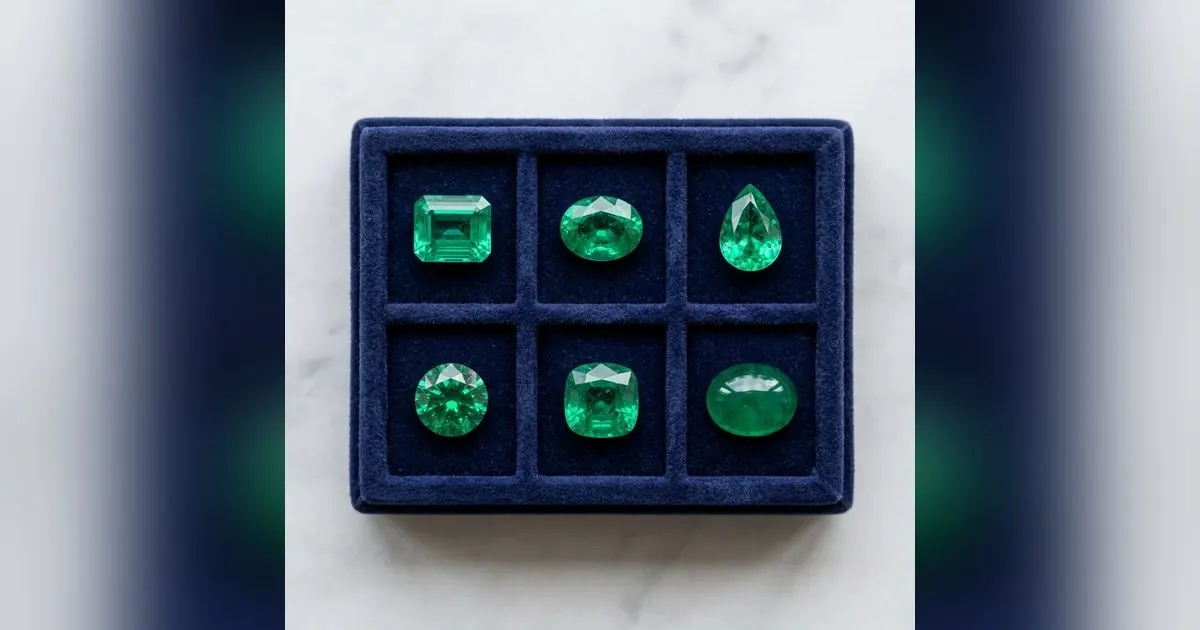
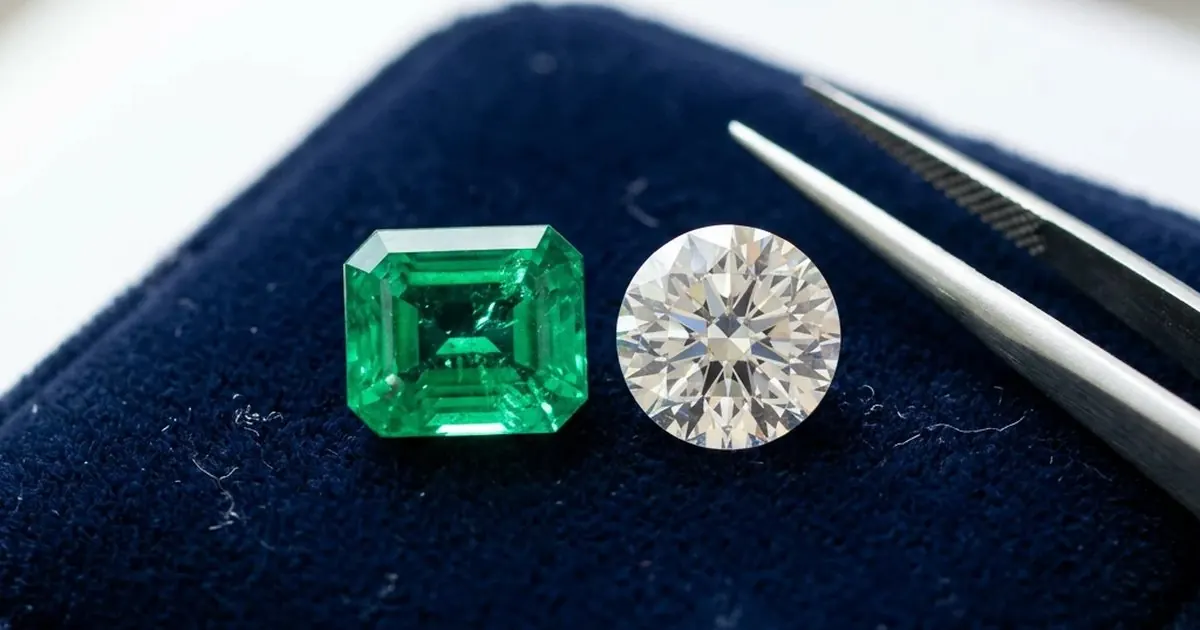
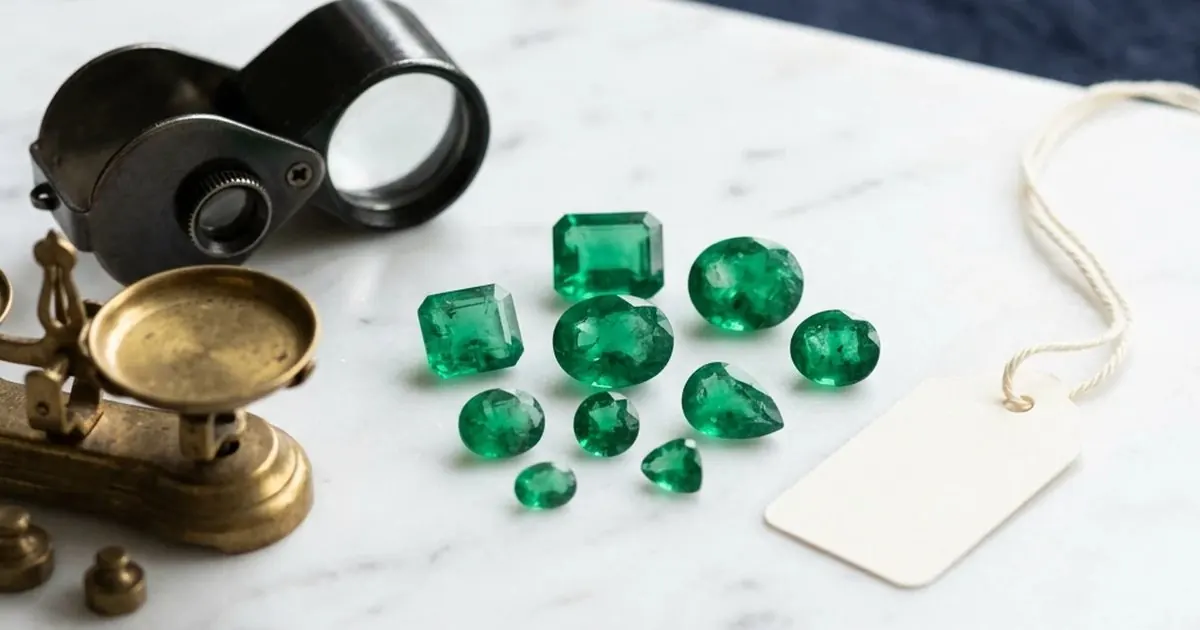
The classic emerald cut is a rectangle with stepped facets and cut corners. It was designed to protect the stone and show off its colour. Ovals, rounds, pears and cushions are also popular.
A cabochon emerald is polished into a smooth dome with no facets. Cabochons suit stones with more inclusions and give a soft, rich look that works well in men’s rings and vintage designs.
Natural vs Lab Created Emerald
A lab created emerald has the same chemistry as a mined one but grows in a factory over weeks. It is usually very clean and costs far less. It is a fair choice if you know what you are buying, but it should always be sold as lab created.
Natural emeralds carry the rarity and history that many buyers want. Most natural stones are oiled, which is standard practice, and a trustworthy seller will tell you so.
Compare prices in how much are emeralds worth, learn what makes emeralds green, or browse our natural emerald rings.
Shop Emerald Rings →
For a clear overview of emerald sources and varieties, read the International Gem Society emerald guide.
Choosing Between Different Types of Emeralds
Start with colour, then clarity, then size. Once you find a stone you love, the origin becomes a bonus rather than the main reason to buy.
Knowing the different types of emeralds helps you ask better questions and spot fair prices. It also helps you choose a shape and setting that suit the way you live.
Quick FAQ
What are the main types of emeralds?
By origin, the main types are Colombian, Zambian and Brazilian. By pattern, trapiche and cat’s eye are rare types.
Which type of emerald is best?
The best emerald is the one with the strongest colour and good clarity, whatever its origin.
Is a Zambian emerald a real emerald?
Yes. Zambian emeralds are natural emeralds with a cooler green, often with good clarity.
What is a trapiche emerald?
A rare emerald with a natural six spoked star of dark lines, formed during growth.
Are lab created emeralds a type of emerald?
They share the same chemistry, but they are grown in a lab and should always be sold as lab created.